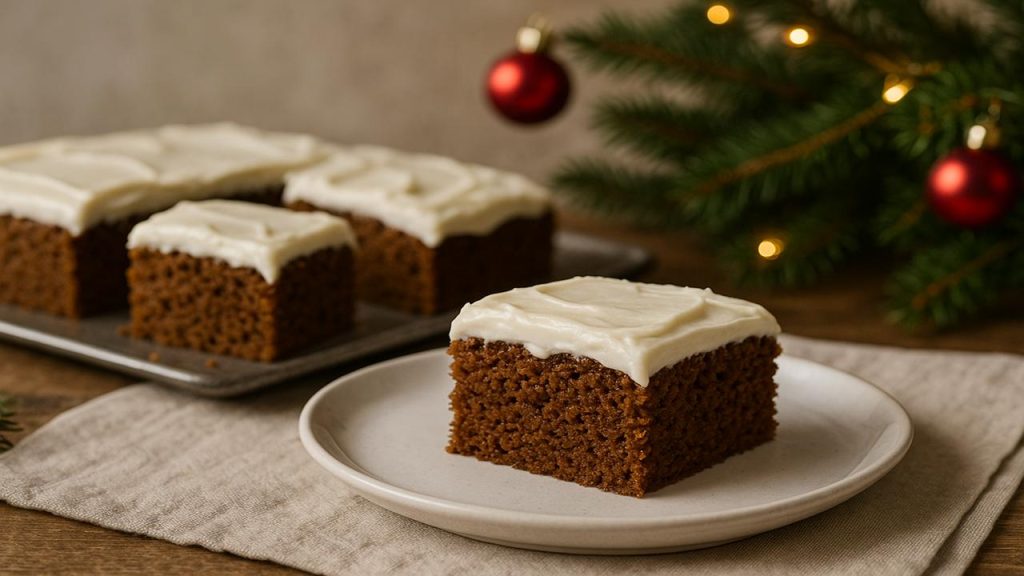
The first whiff arrives before the oven dings: a warm, spiced promise that settles into the corners of the kitchen like a memory. It’s the kind of scent that makes you pause, cup your hands around a mug you haven’t poured into yet, and let the season fold itself around you. This soft gingerbread cake, crowned with a cloud of cream cheese frosting, is both a recipe and a ritual—one that wakes up childhood afternoons and slows down busy December evenings. Baking it feels like composing a small, edible landscape: the deep amber of molasses, the cinnamon dust drifting like new snow, the tang of cream cheese that tastes like a wink of bright sky against the dark, cozy cake.
The Comfort of Spice and Texture
Gingerbread is rarely shy. It speaks in spices—ginger, cinnamon, cloves—and in textures that range from snuggly tight crumb to melt-in-your-mouth softness. In this version the emphasis is on tender crumb: we want a cake that gives when you press it, that springs back with a promise to be forgiving. Molasses carries a bittersweet depth that anchors the sugar, while brown sugar brings enough moisture to keep every forkful plush. Butter, eggs, and a touch of milk create a batter that glides into the pan and puffs in the oven, leaving behind a caramelized crust that is as delicious as it is inviting.
Ingredients That Feel Like Home
When I line up the ingredients on the counter—bowls of spices like little snowdrifts, a jar of molasses like a dusk bottle—the kitchen looks like a tiny market of memories. Here’s a compact list that keeps the cake soft, aromatic, and perfectly balanced for Christmas morning or a late-night slice by the fire.
| Ingredient | Quantity |
|---|---|
| All-purpose flour | 2 cups (250 g) |
| Ground ginger | 2 tsp |
| Ground cinnamon | 1 tsp |
| Ground cloves | 1/4–1/2 tsp |
| Baking soda | 1 tsp |
| Salt | 1/2 tsp |
| Unsalted butter, softened | 1/2 cup (113 g) |
| Brown sugar | 3/4 cup packed (150 g) |
| Eggs | 2 large |
| Molasses | 1/2 cup (120 ml) |
| Buttermilk or milk | 1/2 cup (120 ml) |
| Vanilla extract | 1 tsp |
Method: Turning Batter into Warm Cake
The process is simple, and simplicity is part of the magic. Start by whisking together the dry spices and flour so that every bite will carry an even note of warmth. Cream the butter with brown sugar until the mix looks like a sandy sunset, then beat in eggs, molasses, and vanilla until the batter loosens into a glossy, auburn ribbon. Alternate folding in the dry mix and the milk so the texture stays tender and not dense—think of it as coaxing a shy, pliant dough into confidence. Pour into a prepared 8- or 9-inch pan and smooth the top like a frozen pond awaiting footprints.
Wet and Dry
Combining wet and dry slowly keeps gluten from knitting too tightly. If you overmix, the cake will toughen—so stir until just combined and let the oven do the rest.
Baking Time
Bake at 350°F (175°C) for 25–30 minutes, or until a toothpick feels mostly clean with a few moist crumbs. The top should be a deep golden brown, and the kitchen will smell like a warm, spiced memory taking shape. Let it cool completely before frosting; the cream cheese needs a cool stage to hold up and look like fresh snow piled on the ridge of the cake.
The Frosting: Cream Cheese as Snow
There’s something irreverently joyful about cream cheese frosting on gingerbread. It cuts through the spice, brightens the palate, and spreads like soft light. Beat 8 oz (225 g) of softened cream cheese with 1/4 cup (57 g) of butter until silky, then sift in about 2 cups (240 g) of powdered sugar, add a teaspoon of vanilla, and a pinch of salt. The frosting should be thick enough to mound but smooth enough to ripple. With a spatula, coax it over the cake in generous waves; a few decorative peaks and a dusting of cinnamon or grated orange zest will look like winter’s brushstrokes.
Serving, Storing, and Gifting
Serve this cake with a steaming cup of tea or a glass of milk. Each slice offers a small ritual: the first bite is a warm, molasses-rich embrace, followed by the crisp, sweet edge of frosting. To store, cover loosely and keep at room temperature for a day, or refrigerate for up to five days—bring to room temperature before serving to restore that tender crumb. Wrapped in parchment and tied with twine, a slice tucked into a box becomes an honest, homemade gift that opens houses and hearts.
Christmas is full of tall gestures, but this cake is a gentle one: modest in size, abundant in comfort, and perfectly attuned to slow, candle-lit afternoons. Whether you bake it as a weekend project or a last-minute present, it will reward you with aroma, color, and the kind of simple hospitality that feels like home.
FAQ
Can I make this cake gluten-free?
Yes. Substitute a 1:1 gluten-free flour blend that contains xanthan gum. The texture may be slightly different—denser—but the spices and molasses will still sing. Watch baking time closely; sometimes gluten-free batters bake faster.
How do I prevent the frosting from sliding off?
Make sure the cake is completely cooled before frosting. If the frosting is too thin, chill it briefly until it firms. A thin crumb coat chilled for 20 minutes will also help the final layer adhere without sliding.
Can I make this ahead for a party?
Absolutely. Bake the cake a day ahead and keep it covered at room temperature. Frosting the day of the event keeps it freshest, but you can frost and refrigerate up to three days in advance—bring to room temperature before serving.
Any ideas to vary the flavor?
Stir a tablespoon of orange zest into the batter for citrus brightness, or add a handful of chopped crystallized ginger for a cheerful chew. A splash of rum in the frosting can also be festive.
Is molasses essential?
Molasses provides characteristic depth and color. If you must substitute, dark corn syrup plus a teaspoon of dark brown sugar will work in a pinch, but the flavor will be lighter—less of that classic gingerbread gravitas.