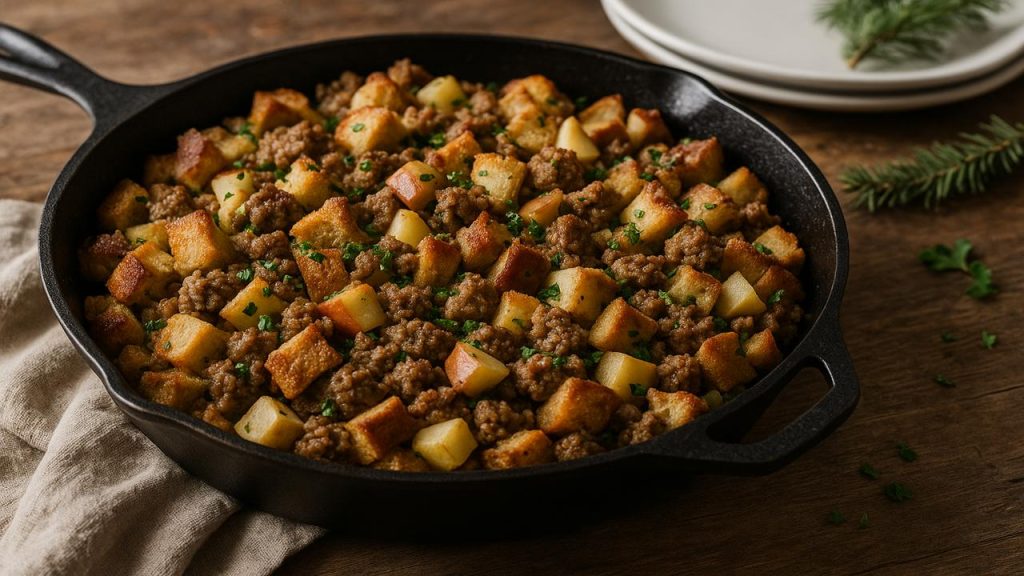
The kitchen is a winter forest of steam and cinnamon, the cast-iron skillet at the center like a warmed stone in a snowy clearing. When you brown sausage until the edges crisp and toss in apples that sing with tartness, the whole house inhales. This one-skillet sausage and apple stuffing is the sort of dish that turns a Christmas dinner into a memory: rustic, fragrant, and perfectly forgiving. It’s the thing I reach for when guests are coming and time is short, when I want a side that feels festive without requiring the precision of a pastry. It’s also the dish that travels well in conversation, because every family seems to have a story about a stuffing that changed the holiday.
Ingredients & Tools
There’s an honesty to the ingredients: sausage, apples, bread, onion, celery, and a bouquet of herbs and butter. These are flavors that know how to sing together—savory meat, sweet-tart fruit, and the cozy crunch of toasted bread. Use a sturdy skillet—cast-iron if you have it—and you’ll get that golden crust and edges that caramelize just so. Below is a compact table of what you’ll need and why, laid out so you can glance and go.
| Ingredient | Quantity | Role in the dish |
|---|---|---|
| Sausage (mild or spicy) | 1 lb (450 g) | Savory backbone, fat for browning |
| Stale bread, cubed | 6–8 cups | Texture and soak-up charm |
| Apples (tart-sweet) | 2–3 medium | Bright sweetness, soft acidity |
| Onion & celery, chopped | 1 each | Classic stuffing aromatics |
| Chicken broth & butter | 2–3 cups / 2–4 tbsp | Moisture and richness |
| Sage, thyme, salt & pepper | To taste | Holiday warmth and balance |
How much you need
For a family of four, aim for about 6 to 8 cups of cubed bread and a pound of sausage. The apples are negotiable—two big Granny Smiths bring brightness, a Honeycrisp sings in the middle, and a softer variety will melt into the crumbs. The bread should be stale enough to soak without collapsing; if it’s fresh, toast it briefly in the oven.
The Scent Story
There’s a particular hour in the kitchen when the household shifts: onions soften and become translucent, then butter begins to brown at the edge and the sausage releases its perfume, meaty and a little sweet. When the apples meet the skillet they hiss, and that sh-h sound becomes the soundtrack of the season. It’s not just about smell—it’s tactile. The buttered bread will clump and then loosen as the broth is poured. You’ll want to reach in and feel the warm crumbs, to test for the right balance of wet and dry, the point where it will hold together on a spoon yet still have crisped edges. These are the little rituals—the tasting, the adjusting—that make this dish feel like a live thing rather than a recipe followed by rote.
Step-by-Step One-Skillet Method
Start by heating the skillet over medium heat. Crumble in the sausage and let it brown; resist the urge to stir constantly—let the edges develop color. Remove excess fat if there’s an excess, then add butter and toss in the onion and celery. Sauté until soft. Add the apples and let them blister, pressing slightly so they release a little juice.
Quick timing
Once the apples have softened, scatter the bread evenly over the pan and drizzle in your broth—enough to moisten but not so much that it’s soupy. Sprinkle your sage and thyme, salt and pepper, then fold gently so the bread soaks in the flavors. Press down with a spatula to compact the mixture and let it sizzle. Transfer to a warm oven for 10–15 minutes if you want a more set center, or leave it on the stovetop and cover for a softer, steamier texture. The edges that meet the metal will crisp into caramelized, savory shards; these are the parts people always fight over.
Tips & Variations
Think of this stuffing as a small ecosystem where one element can tilt the taste. Swap the sausage for a spicy chorizo for heat, or for a sage-and-apple pork sausage for classic nostalgia. Add toasted pecans or chopped chestnuts for wintery crunch, or throw in dried cranberries for a jeweled tang. If you want to keep it vegetarian, replace sausage with browned mushrooms and a touch of smoked paprika. For a more luxurious version, stir in a handful of grated Gruyère or a splash of cream before it goes into the oven.
Serving & Leftovers
Serve directly from the skillet to keep those edges intact. Garnish with fresh thyme and a scattering of chopped parsley or pomegranate seeds for color. This stuffing pairs beautifully with roast turkey, glazed ham, or simply a bowl of roasted Brussels sprouts. Leftovers? They are bliss. Reheat gently in a skillet to revive crisp edges, or form into patties and pan-fry for a golden, portable lunch. The next day, the flavors deepen and the texture becomes more cohesive; a little extra broth or a pat of butter can bring it back to life.
FaQ
Can I make this ahead of time?
Yes. Assemble the stuffing in the skillet up to the point of baking, cover tightly, and refrigerate for up to 24 hours. Bring it to room temperature before heating, then finish in the oven for 15–20 minutes until bubbling. You may need a few extra minutes if it’s chilled solid.
What type of apples work best?
Choose a balance: Granny Smith for tartness, Honeycrisp for sweetness and crunch, or Pink Lady for a good middle ground. Avoid apples that will completely disintegrate if you want distinct pieces—unless you prefer them melted into the crumbs.
Can I make it gluten-free?
Absolutely. Substitute gluten-free bread cubes and ensure your sausage and broth are gluten-free. The method and flavors remain unchanged; you’ll still get those caramelized edges and tender center.
How do I prevent the stuffing from getting soggy?
Use stale or toasted bread, and add broth gradually. The goal is moist, not wet. Pressing the mixture into the skillet and allowing the edges to caramelize helps develop texture. If you prefer extra crisp, finish under a broiler for a minute or two—watch closely.
Can I double the recipe for a crowd?
Yes, but use multiple skillets or a larger baking dish to keep a good surface-to-volume ratio. Overcrowding will steam rather than crisp, so spreading it out keeps those coveted browned edges.