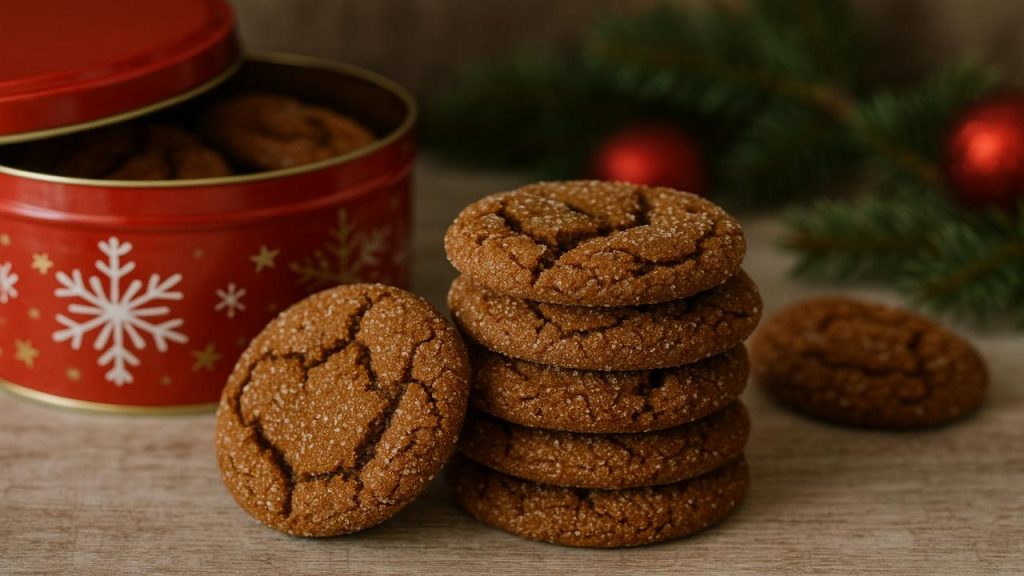
The kitchen smells like winter sunlight and cinnamon—the kind of warm, steady scent that tugs at the mouth and the memory. I set a wooden spoon down, little red specks clinging to its grooves like confetti, and watch sugar bloom into crinkles on a cooling rack. Red velvet crinkle cookies are more than a recipe in my family; they are a snow-globe scene I can hold in my hands: powdered sugar fields, velvet hills of cocoa, and the quiet promise that somewhere, soon, a small plate will be waiting by a fireplace. Baking them feels like storytelling. Each fold of batter, each gentle roll in sugar, is a line I add to a tale we will tell Santa on Christmas Eve—about good wishes, about crumbs left behind as evidence of joy.
The First Warmth: Mixing Memory into Dough
When you stir red velvet dough, it’s tactile and theatrical all at once. The butter yields with a soft sigh under the paddle, and the dough, at first pale and shy, deepens into a color that reminds you of a robin’s breast pressed against an old velvet scarf. You can almost hear a kitchen chorus—mixer hum, spatula scrape, the tiny clink of a measuring spoon as you add a dash more cocoa for depth. The vinegar and buttermilk answer each other like a practiced duet, giving a slight tang that makes the cookie more than its festive red. It’s important to scrape the bowl frequently; every scrape brings more air into the batter and keeps the cookies from feeling dense. When the dough is ready, it fills your hands with a cool, pliant texture that forgives mistakes and rewards patience.
The Ritual: Shaping and Sugar-Dusting
Rolling the tiny globes of dough is a kind of winter ritual. I use a small cookie scoop so the cookies are obediently uniform, and then I roll each ball in powdered sugar until they glitter like frost. That sugar doesn’t just sweeten—it creates a thin, delicate crust that will split mid-bake into the telltale crinkles. The motion is meditative: palm to palm, little spins, a flour dust halo that catches the kitchen light. Children often stand on tiptoe to help, branded with flour on their foreheads like little winter explorers. The crinkle is a bit like watching a mountain form under snow; you know the landscape will change as the heat comes, but for a moment it’s perfectly serene.
In the Oven: The Sound and Scent of Cheer
As the cookies go in, time stretches. The oven hum becomes an ambient lullaby. Fifteen minutes feels like an eternity and a blink: on the cusp of doneness, you’ll notice their centers have puffed slightly, and the powdered sugar has turned into a cracked crust with bright red valleys peeking through. Pull one out and press gently at the edge—the cookies should be tender, not brittle. The smell is the thing that starts from the oven and walks through the house: deep cocoa, butter sweetened, a faint tang of buttermilk, like the smell of a winter hike returning to a den of warmth. It’s the scent that makes you look for Santa’s plate before you’ve even set it down.
Presentation: Santa’s Plate and the Art of Leaving a Gift
Presentation for Santa is almost ceremonial. I choose a plate—usually mismatched china that belonged to my grandmother—because the cracks and gold rim give character like rings on an old tree. A few cookies are laid in a small crescent, as if to invite a hidden guest. A sprig of rosemary tucked in for green. A glass of milk chilled just so, the condensed rim freckled with tiny ice crystals. The whole tableau is about sending a message: thank you, we waited, we believe. Children write little notes—sometimes neat, sometimes scrawled—and tuck them under the plate. The cookies themselves should be cool enough to eat but still pliant, their centers soft; Santa prefers cookies that melt into the mouth rather than clink against the roof of it.
Recipe Snapshot
Baking essentials at a glance
| Ingredient | Measurement |
|---|---|
| All-purpose flour | 1 3/4 cups (220 g) |
| Granulated sugar | 3/4 cup (150 g) |
| Unsalted butter, softened | 1/2 cup (113 g) |
| Cocoa powder | 2 tbsp |
| Buttermilk | 1/4 cup |
| Vinegar (white) | 1 tsp |
| Red food coloring | 1–2 tbsp (to taste) |
| Egg | 1 large |
| Powdered sugar (for rolling) | 1 cup |
Work the butter and sugar until light, add egg and coloring, then alternate flour and buttermilk that’s been mixed with vinegar. Chill if the dough feels soft, then roll in powdered sugar and bake at 350°F (175°C) for about 12–15 minutes. The table above is meant to be a quick, mobile-friendly reference—clear and easy to read on small screens when holiday helpers want to glance and go.
There’s a quiet joy in the crumbs, the way a child’s cheeks puff from a stolen bite, and how a cookie left on a plate becomes a token of belief. I like to imagine Santa pausing at the door, taking a tiny sip of milk, leaving a smudge of cookie on his glove like a little signature. If you listen closely after the plate goes down, the house seems to hold its breath, as if the night itself leans closer to listen to the small sounds of someone—somewhere—doing something kind.
FAQ
Can I make the dough ahead of time?
Yes. The dough can be refrigerated for up to 48 hours or frozen for up to 3 months. If frozen, thaw in the refrigerator overnight before rolling and baking. Chilled dough is actually easier to handle and can improve the cookie’s texture.
How do I get the perfect crinkle?
The crinkle depends on two things: a generous coating of powdered sugar and the right bake time. Roll the dough balls thoroughly so they are well-covered. Bake until the edges are set but the centers are still soft—usually 12–15 minutes—so the top cracks as they expand.
Can I make these without red food coloring?
Yes. For a natural hue, try beet powder or a small amount of concentrated pomegranate juice; results will vary. The flavor balance remains the same, but the signature red will be subtler.
How should I store the cookies?
Keep them in an airtight container at room temperature for up to 4 days. If you want to keep them longer, freeze in a single layer on a tray, then transfer to a sealed container for up to 3 months. Thaw at room temperature before serving.