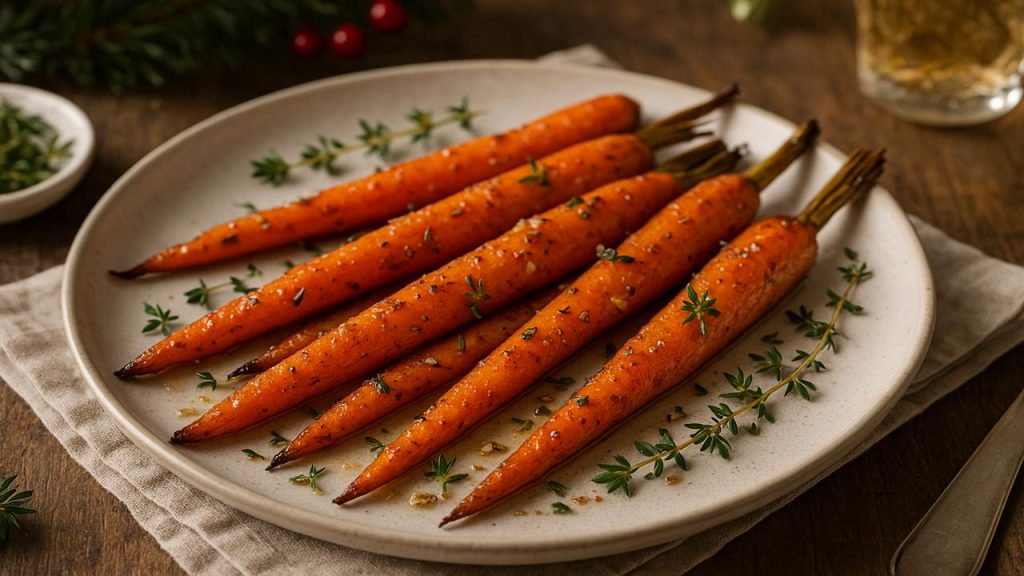
The house smells like orange light and a slow, kind fire: something sweet is breaking into caramel at the edges of the pan, and the sticky breath of honey and garlic curls up like steam from a winter pot. Christmas has a sound and a spice, an unspoken tactility—wrapping paper crinkles, wool against the cheek, the weight of candlelight. On this evening, the center of celebration is a roasting tray of honey garlic carrots, threaded with thyme and browned until their sweetness is a small, honest miracle. They are simple vegetables made ceremonial, a side dish that leans in and asks to be remembered.
Selecting carrots like small miracles
There is a ritual in choosing carrots for roasting. Look for dense, slender roots—those with a little taper and a crown that tells you they were pulled from the earth with care. Neon orange is not always the sign of flavor; sometimes the slightly muted, almost rust-colored skins carry deeper sweetness. Run your fingers over them, and you’ll notice a firmness that hints at the best texture after roasting: tender inside, lightly crisp at the tips. I love the irregular shapes: bunny-eared ends and knobby shoulders that catch the honey-clove glaze. They bring personality to the plate and a rustic joy to a holiday table.
The honey-garlic glaze that sings
Mix the honey and garlic slowly, and you will notice how the scent shifts—raw garlic’s sharpness softens against the plush roundness of honey, a heady perfume that feels like a promise. Add a splash of olive oil, a squeeze of lemon, and a pinch of salt, and the glaze becomes a glossy language for the carrots to speak back. Toss the carrots in this warm, sticky mixture; you want every curve to be lacquered but not drowned. When roasted, the sugars will bubble and concentrate into little pockets of concentrated sweetness while the garlic mellows into savory gold.
| Ingredient | Amount | Note |
|---|---|---|
| Carrots | 2 pounds | Peeled or scrubbed; halved lengthwise if large |
| Honey | 3 tbsp | Wildflower or clover |
| Garlic | 3 cloves, minced | Or pressed |
| Fresh thyme | 6–8 sprigs | Sprigs left whole for roasting |
| Olive oil | 2 tbsp | Light or extra virgin |
| Salt & pepper | To taste | Coarse salt for finishing |
Roasting: the alchemy of heat
Set the oven to a steady 400°F (200°C), and slide the tray into that deep, dry heat. The first twenty minutes are quiet; things inside are rearranging themselves on a molecular level. The honey loosens, the garlic perfumes the oil, and caramelization begins at the edges. Halfway through, give the carrots a nudge—flip them, spoon the glaze over any dull spots, press thyme sprigs into the crowd. The aroma that fills the kitchen at this stage is like a memory bending toward the present: sweet then savory, with the green, resinous lift of thyme. When the carrots are fork-tender and the glaze has browned in places, the transformation is complete. The edges will crisp; the centers will hold a gentle, yielding heat that feels like the soft part of a winter scarf.
Textural notes and small rituals
There is an intimate pleasure to plating: a steaming bundle of glazed carrots arranged like bridge planks across one another, thyme strings draped like garlands, a final drizzle of honey catching in the light. Scatter a pinch of flaky sea salt and the faint trembling of cracked black pepper on top; these small resistances against sweetness make each bite more interesting. Some people like a squeeze of lemon at the end—a bright counterpoint that snaps the flavors awake. Others fold in a few toasted nuts for a surprise crunch. The rituals you choose become the holiday’s flavor handwriting.
Serving to gather a table
Place the tray on the table and watch as something humble becomes the evening’s ambassador. A cousin reaches for a tip; a child murmurs surprised approval. The carrots are not meant to shout but to invite conversation, to pair naturally with roast meat and fermented condiments, to slice away the heaviness of holiday plates with their light sweetness. They are seasonal, yes, but also small pockets of the garden saved for the long night. Around them, plates become cozier, laughter seems to steep like tea, and the room grows into a map of shared memories.
Leftovers and sweet afterlives
If there are any leftovers (and often there are), they reheat beautifully. A quick minute under a broiler restores the glossy snap; chopped, they tuck into salads or grain bowls, warming the next day’s lunch. Leftover carrots mashed with a touch of butter and mustard take on a comforting nostalgic note—like a story retold with new details. In the quiet aftermath of the main feast, these bits of sweetness keep the holiday’s warmth alive, portioned into glass containers like folded notes.
FAQ
Q: Can I use dried thyme instead of fresh?
A: Yes, but use it sparingly—about 1/3 the amount of fresh thyme. Add it to the glaze so it rehydrates and releases flavor as the carrots roast.
Q: How do I prevent the garlic from burning?
A: Mince it finely and mix it into the glaze with oil and honey; the sugars help protect the garlic from direct heat. If you’re worried, tuck whole smashed cloves among the carrots instead—their flavor will be milder and they won’t char as quickly.
Q: Can I make this ahead for Christmas dinner?
A: You can prepare the glaze and trim the carrots a day ahead. Roast them the day of the dinner for best texture, or roast ahead and reheat briefly in a hot oven to refresh the glaze before serving.
Q: What wine or drink pairs well with honey garlic roasted carrots?
A: A crisp white with a touch of acidity (think dry Riesling or Chenin Blanc) balances the honey’s sweetness. For non-alcoholic options, spiced apple cider or sparkling water with a lemon twist work beautifully.