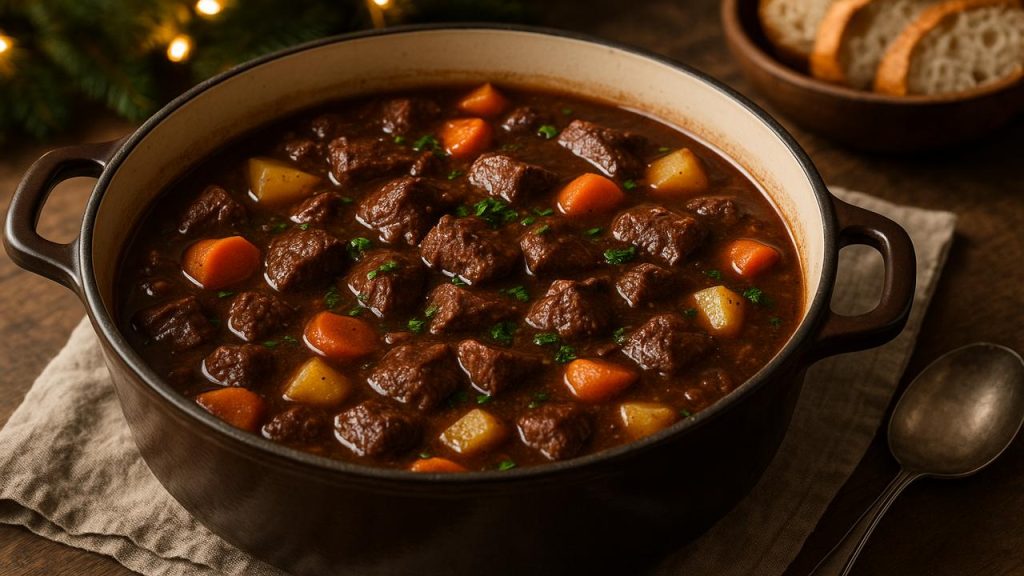
There is a certain hush that falls over the house on a cold Christmas night — the kind of quiet that makes the windows look like frames for small, private constellations of breath and frost. In that hush, a single pot on the stove becomes more than cookware: it is a small ceremony, a slow answer to the cold. Red wine steam rises in velvet threads, and the kitchen fills with a smell that feels like a memory unfolding, warm and deep. This one-pot beef stew is that memory made tangible: rich, simmered low and long, the kind of dish that asks you to sit down, pull your scarf a little closer, and stay a while.
Why This Stew Belongs on a Cold Christmas Night
There are stews and then there is the stew that seems to match the sound of a winter evening — the tick of an old radiator, the muffled crunch of snow under boots, the soft clink of a spoon against a bowl. This recipe leans on red wine not for flamboyance but for a depth that feels like velvet on the tongue, a rounded backbone that fills the spaces between meat and root vegetables. I like to think of the wine as the night sky you ladle into the pot: dark, generous, and dotted with stars of thyme and bay leaf. As it simmers, juices curl up and coat every browning piece, alchemizing the ordinary into something almost luminous. For Christmas, when stories are long and the small hours generous, a pot like this lets you move slowly and luxuriate in the small, steady rituals of cooking.
Ingredients That Tell a Story
Gathering the ingredients is part of the joy. Choose beef with good marbling — chuck roast is my usual companion — because those fattier threads will melt and make the broth sing. Grab a full-bodied red: Cabernet or Merlot will give structure without stealing the spotlight. Add carrots and celery for sweetness and clarity, a few cloves of garlic to warm the bones, and pearl onions to offer those tender, honeyed pops that feel like tiny gifts in each spoonful. Below is a concise table to guide you; use it as a quick checklist when you gather your winter provisions.
| Ingredient | Amount |
|---|---|
| Beef chuck, cut into 1½–2″ pieces | 2–3 lbs (900–1350 g) |
| Dry red wine | 1 1/2 cups (360 ml) |
| Beef stock | 3 cups (720 ml) |
| Carrots, peeled and sliced | 3–4 medium |
| Celery, sliced | 2 stalks |
| Pearl onions or small yellow onions | 12–16 |
| Tomato paste | 2 tbsp |
| Garlic, minced | 3 cloves |
| Fresh thyme and bay leaf | 3–4 sprigs + 1 leaf |
| Flour (optional, for thickening) | 2 tbsp |
| Salt & pepper | To taste |
The One-Pot Ritual: Step-by-Step
Quick Method Overview
Begin by salting the beef and patting it dry so the pieces brown instead of steam. Heat oil in a heavy Dutch oven until it shimmers, then brown the meat in batches; scent the kitchen with that first caramel note and you know you’re on the right path. Remove the beef, soften the onions and celery, then add tomato paste and garlic to toast for a few breaths. Deglaze the pot with red wine, scraping the browned bits like tiny treasure maps from the bottom. Return the meat to the pot with beef stock and herbs, bring it to a gentle simmer, then let it go, low and slow, for 1.5 to 2 hours — the longer, the better. Add carrots and pearl onions halfway through so they keep some texture but still carry the stew’s warmth. If you want a more velvety coat on the spoon, whisk flour into a bit of cold water and stir it in toward the end, letting it thicken just so. The real secret, though, is patience: a good stew rewards the hands that wait and the houses that stay a little longer over the flame.
Sensory Notes While It Simmers
Pay attention. The stew talks back as it cooks. At first, you’ll get the metallic edge of wine, then sweetness as the tomatoes and carrots loosen into the broth. The air will be peppered with thyme and bay leaf, the way a pine bough perfumes a room when you bring it indoors. When you stir, you’ll see ribbons of glossy fat lift and coat the spoon; when you taste, there’ll be an echo of tannin from the wine that the beef and stock will soften into honeyed richness. The vegetables should feel like small, tender islands in a sea of savory, not mushy accidents. On the coldest nights, ladle a bowl, watch the steam draw little patterns against the window, and you’ll understand why slow cooking feels almost like keeping a fire with your hands.
Serving, Pairing, and Leftover Love
Serve this stew in deep bowls, with crusty bread to mop and an extra twig of thyme for the eye. A simple green — peppery arugula dressed in lemon and oil — provides a bright, crisp foil to all that lushness. If you want to pour wine by the bowl, choose something from the same family as what you cooked with: a medium-bodied red that echoes the stew’s warmth without competing. Leftovers improve overnight as flavors bed down; reheat gently and add a splash of broth or wine if it’s too tight. The stew also freezes beautifully: divide into portions and fold the future into your freezer in neat, cold parcels. On another night that feels winter-slow, thaw and let it come back to life on the stove, and it will be like opening a letter you were glad you kept.
FAQ
Can I use a different cut of beef?
Yes. Chuck is ideal for its marbling and connective tissue that breaks down into silkiness, but brisket or short ribs work well too. If you use leaner cuts like round, expect to cook more carefully to avoid dryness.
What red wine should I use?
Use a dry, full-flavored wine you would enjoy drinking: Cabernet, Merlot, or a Grenache blend are good choices. Avoid anything labeled “cooking wine” — its flavor will be flat.
How long should I simmer the stew?
Plan for 1.5 to 2 hours at a low simmer. Check at 90 minutes: the beef should be tender and easily pull apart with a fork. If it’s not quite there, give it another 20–30 minutes.
Can I make this vegetarian?
You can adapt the structure—use hearty mushrooms, root vegetables, and a splash of soy or miso for umami—but the character will shift. For the wine-scented, slow-simmer magic, use a rich vegetable stock and consider adding lentils for body.
Any tips for thickening without flour?
Reduce the stew uncovered for 10–20 minutes to concentrate flavors, or mash a few cooked carrots/potatoes into the broth to thicken naturally. A beurre manié (butter and flour paste) works too, but that uses flour in a different form.