There’s a moment on Christmas Eve when the house slows its frantic tempo: lights dimmed to a buttery glow, a record hums low, and the smell of something briny and warm begins to thread through the rooms. It’s the kind of smell that reaches back to summers on rocky coasts and forward to cozy promises—clam broth simmering with butter and thyme, steam painting soft halos on the windows. Tonight, instead of fussing over a dozen dishes, you carve out a single ritual: deep bread bowls filled with clam chowder, handed around the table like a small, hot offering. It’s simple, it’s comforting, and it tastes like the sea leaning in to wish you a quiet, joyous night.
Why This Chowder Feels Like Christmas
Chowder on Christmas Eve is not about tradition as much as it is about atmosphere. A bowl of chowder acts like an embrace—thick, honest, and full of warmth. The clams bring a whisper of salt and ocean, the cream softens into something almost velvety, and the bread bowls are edible bowls of memory. You get the crunch, the steam, the little coastal fireworks of parsley, and the threaded scent of bay leaf and smoked bacon. For people who grew up near water, it’s nostalgia; for others, it’s the kind of food that creates new stories—kids poking at the bread lids, older hands reaching for second helpings, and a quiet exchange of holiday wishes across a table that smells like the harbor.
The Bread-Bowl Ritual
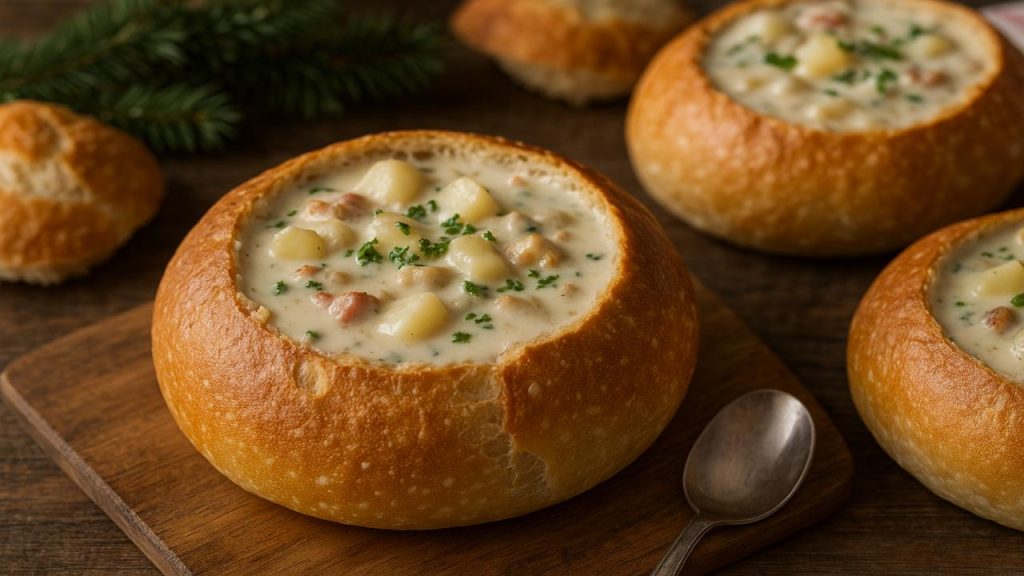
There’s theatre in hollowing a loaf. Choose a round sourdough or a boule with a crust that snaps. Score the top, cut a lid, and scoop out the center until you have a warm, doughy bowl that will cradle the chowder and slowly soften without collapsing. Toast the interior just a touch if you like—brush with garlic butter, slide under the broiler for a minute—and you’ll have a texture that’s both chewy and delicate. Serve the lids alongside as rustic spoons, and watch how people instinctively tear and dunk, making the act of eating the soup part of the celebration. It’s tactile, it’s communal, and it smells like every winter market you’ve ever loved.
Ingredients That Sing
The best chowder starts with good clams—fresh littlenecks if you can get them, or a decent canned clams reserve when the weather or time won’t allow a trip to the coast. Butter, onions, celery, and a little smoked bacon provide the soulful base; potatoes give the soup body; cream and a splash of white wine make it lush. Thyme and bay leaf add the kind of herbal architecture that makes a spoonful linger. Below is a compact ingredient table to keep on your phone while you shop—simple and reliable.
| Ingredient | Amount |
|---|---|
| Fresh littleneck clams (or canned clams) | 2 lbs / 3 cans |
| Bacon, chopped | 4 slices |
| Onion, celery, garlic | 1 cup total |
| Potatoes, diced | 2 cups |
| Heavy cream & clam liquor | 1 cup & 1–2 cups |
Step-by-Step, Senses First
Begin by rendering the bacon until the edges are jewel-bright; the smell will fill the kitchen like a little bonfire. Sauté the onion and celery in that fat until they release sweetness, then add garlic and thyme—just enough to make the air smell like a damp walk by the sea. If you’re using fresh clams, steam them open with a cup of white wine and strain the liquid; that briny, golden liquor is gold—save it. Add diced potatoes and cover with broth and clam liquor, simmering until the potatoes yield when you press them with a fork. Stir in clams, a splash of cream, and finish with butter for silk. Taste for salt—clams are already saline, so be cautious—and brighten with lemon and chopped parsley. Ladle into the warm bread bowls, crown with cracked pepper and a sprig of thyme, and serve immediately so that the steam and scent are part of the first bite.
Tips for a Cozy, Smooth Chowder
If you want a thicker chowder, mash a few cooked potatoes against the side of the pot to release starch; if you prefer a lighter pour, dilute with a splash more clam liquor or milk. For texture contrast, sauté small cubes of the reserved bread centers until golden and use them as crunchy croutons. Make the chowder a day ahead to deepen flavors—reheat gently over low heat and stir in cream at the last minute. To avoid overcooking the clams, add them at the end; they only need a minute or two. And if you’re cooking for a crowd, keep extra bowls and a ladle near the hearth or the oven, because people will inevitably wander with bowls in hand, talking in lowered, grateful tones.
Serving and Leftover Magic
Serving is where the night blooms. Place the loaves on wooden boards, ladle chowder steaming into each, and let people gather and tear at their lids. The act of eating becomes slow and conversational; the rhythm of dipping bread into broth matches the cadence of storytelling. Leftovers are a secret joy—clam chowder transforms the next day, its flavors knit tighter. Pour it over cooked pasta for a decadent lunch, or fold in chopped cold lobster for a luxed-up second act. If you’re willing to be adventurous, use the leftover liquid as a base for a creamy seafood pasta, or freeze small portions for quick, soothing meals later in winter.
FAQ
Q: Can I use canned clams? A: Absolutely. Canned clams are an excellent, time-saving option. Use the canned juice to replace some of the clam liquor or broth, but taste for salt before seasoning.
Q: How do I keep the bread bowls from getting soggy? A: Toast the hollowed-out interior briefly or brush lightly with melted butter before filling. Serve immediately to prevent too much softening.
Q: Can I make this dairy-free? A: Yes. Substitute coconut cream or a cashew cream for a rich, dairy-free alternative, and use olive oil instead of butter for sautéing.
Q: What’s a good wine pairing? A: A crisp, mineral-driven white—think unoaked Chardonnay or a dry Sauvignon Blanc—will complement the brininess without overpowering the chowder.
Q: Can I prepare this ahead for a large gathering? A: Make the base a day ahead, cool and refrigerate, then gently rewarm and add clams and cream just before serving. Hollow the loaves the morning of to keep them fresh.