There is a particular hush that settles over a kitchen on Christmas morning — a hush like the world holding its breath while the oven does its slow, miraculous work. The smell of garlic warming in oil, the green snap of rosemary being stripped from its stem, the soft, deliberate ritual of rubbing salt into a wedge of beef: these are small acts that, together, feel ceremonious. A perfect prime rib roast for Christmas isn’t just food; it’s memory in the making, a centerpiece that says we are here, gathered and present, and we will feast. This recipe is less a strict formula than a conversation with heat and time — a way to coax the deepest flavors from a good piece of beef, to let garlic and rosemary sing without overpowering the meat’s natural voice.
Choosing the Right Cut and Size
When you walk into the butcher’s, look for beef that seems alive even in its cold stillness: a bright, deep red marbled with thin ribbons of white fat. A prime rib roast — often called a standing rib roast — carries a richness that’s forgiving and luxurious. For a Christmas table, plan on 1 pound per person if you want leftovers, or ¾ pound if you are serving many sides. If you can, buy a whole rib roast (3–7 ribs) and ask the butcher to keep the bones attached; they act like a natural roasting rack and add flavor. Run your fingers along the fat cap. It should be supple, not dry. This tactile inspection is part of the ritual: selecting meat that promises tenderness and a mouth-coating, buttery finish when it arrives at the table.
Seasoning: Garlic, Rosemary, and Salt — A Rustic Coating
Garlic-Rosemary Rub
The seasoning for this roast celebrates simplicity. Mince three to six cloves of garlic, depending on the weight of the roast and your household’s love of garlic. Strip fresh rosemary leaves until your fingers smell like an evergreen bough, then chop them fine. Mix garlic and rosemary with coarse kosher salt and a generous drizzle of olive oil until it forms a paste that clings. Massage this paste over the entire surface of the roast, working it into crevices and over the fat cap. Salt does more than season; it draws out moisture briefly and then helps the exterior become a fragrant crust. Let the seasoned roast sit uncovered in the refrigerator for at least 4 hours, ideally overnight. This quiet, cold nap deepens flavor and dries the surface for better browning in the oven.
Cooking Method: Low and Slow, Then High Heat
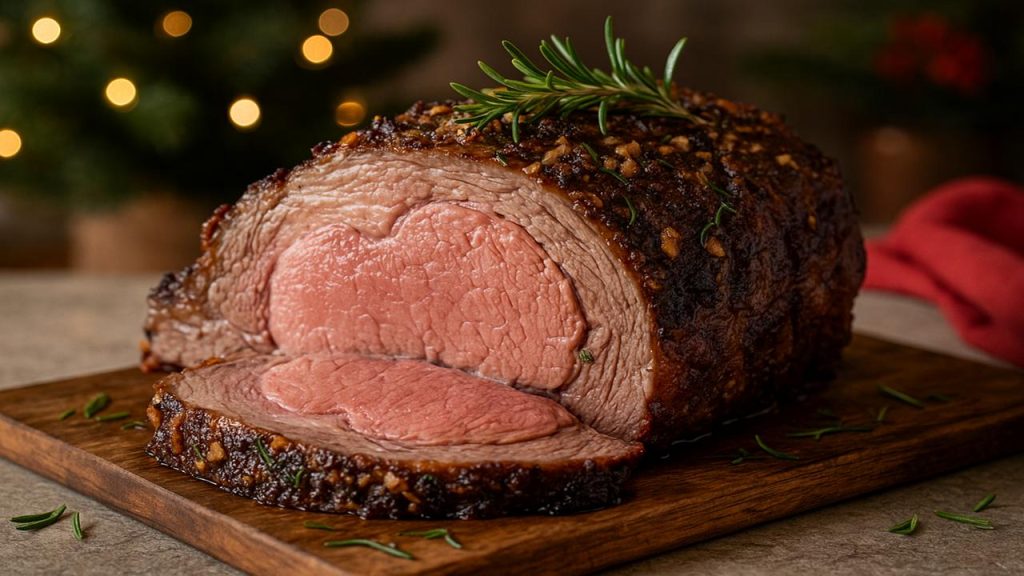
The best way to get an evenly pink interior with a deeply caramelized crust is to cook low and slow, then finish hot to sear the outside. Preheat your oven to 225°F (107°C) and place the roast on a rack set in a roasting pan with the bone side down. Roast gently until internal temperature reaches 115–120°F for medium-rare (slightly higher if you prefer medium). This will usually take around 20–25 minutes per pound at this low temperature, but for reliability use a probe thermometer. Then crank the oven to 500°F (260°C) or use the broiler and sear the roast for 10–15 minutes until a crust forms and the internal temperature climbs to 125–130°F. Remove it and rest — resting is as important as any other step.
| Roast Weight | Low Temp Target | Estimated Time (low roast) | Finish Temp (after sear) |
|---|---|---|---|
| 3–4 lbs | 115–120°F | 1.0–1.5 hours | 125–130°F |
| 5–7 lbs | 115–120°F | 2.0–2.5 hours | 125–130°F |
| 8–10 lbs | 115–120°F | 3.0–4.0 hours | 125–130°F |
Roasting Day: Ritual and Senses
What I love about roasting is that it rewards patience with aroma. As the roast is slowly warming, the garlic begins to bloom, the rosemary releases its piney perfume, and the kitchen fills with a low, savory hum. When you increase heat to sear the exterior, the smell turns into something almost carnelian — a coating of toasted, blistered flavor that crackles when you press the crust. Listen for the tiny pops and the faint sighing of fat rendering. That sizzle is music to the holiday; it tells you that the exterior is forming the caramelized skin that will provide textural contrast to the melt-in-your-mouth interior. Keep a tray for drippings under the roast to collect all that browned goodness for your au jus.
Resting, Carving, and Serving
Once the roast hits the finish temperature, pull it from the oven and tent it loosely with foil. Rest for at least 20–30 minutes; this pause lets juices redistribute and the internal temperature to settle into a perfect medium-rare. The act of carving is almost ceremonial: slice against the grain into thick, confident cuts, letting each piece reveal its rosy heart. Serve on a warm platter with a small bowl of au jus made from deglazed pan drippings, a spoonful of horseradish cream, and perhaps a scattering of flaky sea salt on top of the slices. Arrange roasted root vegetables, buttered brussels, or a simple herb salad alongside. The contrast of crispness, brightness and the roast’s deep umami is what makes the meal feel like a full story.
The good thing about a Christmas prime rib is how forgiving it is and how well it knit itself into the fabric of the day. Make the roast the anchor and design the rest of the meal around textures and colors: something bright and acidic to cut the richness, something crunchy to contrast the meat’s silkiness, and a sweet element — roasted carrots or glazed parsnips — to nod to the season. When the last slice is gone and the table grows quiet with satisfied sighs, you’ll know the ritual worked: the roast delivered not just a meal, but a moment.
FAQ
What’s the best internal temperature for medium-rare prime rib?
Remove the roast from the oven when the internal temperature reads 115–120°F during the low-roast phase; after searing, aim for a final internal temperature of 125–130°F for a classic medium-rare. Resting will raise the temperature a few degrees.
Can I prepare the roast a day ahead?
Yes. Rub and salt the roast, then leave it uncovered in the refrigerator overnight. This dry-aging step intensifies flavor and ensures a better crust. Bring it to room temperature before roasting.
How do I make a simple au jus?
After roasting, pour off excess fat, place the roasting pan on the stovetop, add a splash of red wine or beef stock and scrape up browned bits. Simmer to concentrate flavors, season to taste, and strain if desired.
What if I prefer my roast more done?
If you like medium, finish the roast at a slightly higher target (135–140°F); adjust cooking times and remember that a larger roast will hold heat longer, so remove sooner than you might think and always rest before slicing.