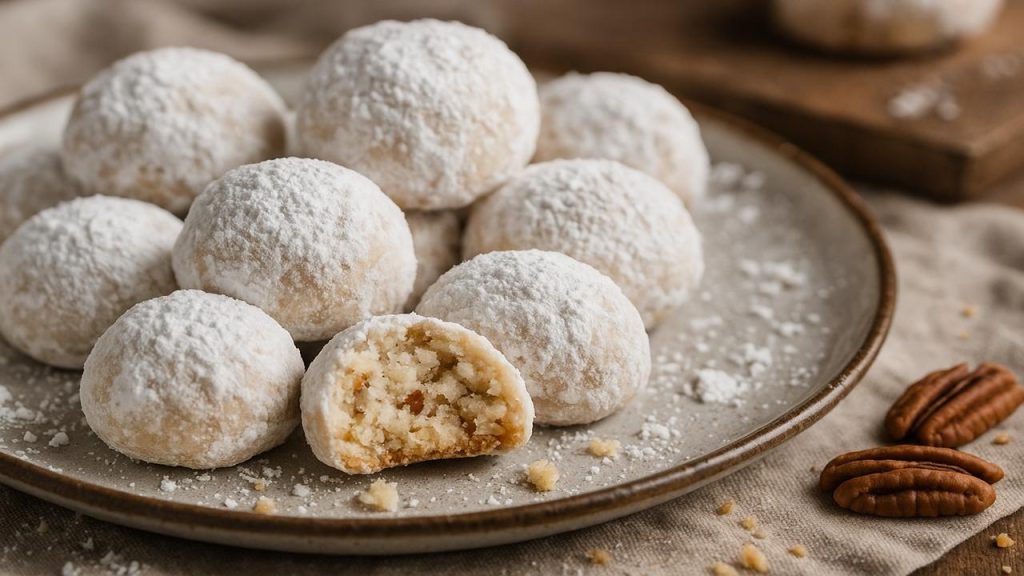
There are moments when a kitchen smells like memory — butter browned until it hums, walnuts or pecans toasted until they whisper, and sugar dusting the air like the first hush of snow. Classic pecan snowball cookies, known in many homes as Mexican wedding cookies, arrive at the table with that soft hush: a crescent of warmth, a nuttiness that sits in the mouth like an old friend, and a powdered-sugar coat that catches the light and the eye. They are small, unassuming, and ceremonial in their simplicity, the kind of cookie that makes you slow down, cup it in your palm, and listen to the quiet between bites.
Why these cookies feel like a small winter ceremony
When you bite into a pecan snowball, there is a quick, buttery crunch followed by a melt — flour and butter dissolving into the nutty grain of toasted pecans. The texture is deliberately delicate: more crumb than chew, a texture that is almost landscape, like a tiny plateau of crumble with a dusting of fresh snow. In kitchens across cultures these are called by different names—Polvorones, butterballs, and Mexican wedding cookies among them—but the ritual is the same: make a dough with love, shape the small orbs by hand, and roll them in powdered sugar while still warm so the sugar clings like frost. They are cookies that invite conversation, slow hands, and shared moments.
Ingredients that sing
There’s a small, intentional chorus of ingredients here — butter, flour, sugar, and pecans — each one earning its note. The butter sets the voice: use it cold for a denser crumb, or soften it to make the dough friendlier to work with. Pecans add warmth and personality; once toasted, they turn sweet and a little smoky, more than just nuts, but a woody anchor. Powdered sugar is the visual punctuation, the snow. Below is a simple ingredients table that fits neatly on mobile screens and helps you gather what you need before the ritual begins.
| Ingredient | Amount |
|---|---|
| Unsalted butter, softened | 1 cup (226 g) |
| Powdered sugar (plus extra for rolling) | 1/2 cup + 1–2 cups for coating |
| Vanilla extract | 1 teaspoon |
| All-purpose flour | 2 cups (240 g) |
| Finely chopped pecans, toasted | 1 cup (120 g) |
Hands-on: the gentle shaping ritual
There is a kind of meditation in shaping these cookies. After you cream the butter with the initial powdered sugar and stir in vanilla, the flour and pecans transform the mixture into a powdery, pliable dough. Your hands become the tool and the thermometer: if the dough crumbles, a pinch of milk or a whisper of extra butter brings it back to cohesion. Form small balls — a heaping teaspoon or a walnut-sized orb — and place them on a baking sheet with room to breathe. The shaping is slow, circular, almost like rolling a seed into soil. If you press gently with your thumb, you might make a little dent on top, a thumbprint like a promise of texture to come. That small, repetitive motion is where memories are built: kids at the counter, a visitor with flour on their apron, a playlist that has been playing all afternoon.
Baking and the moment they bloom
In the oven they change, quietly and privately. At 350°F (175°C), within 10–14 minutes, the edges set and the surface takes on a whisper of color. You’re not looking for a brown cookie so much as a set one: the center should still be pale and soft. The aroma at this point is intoxicating — butter and roasted pecans, sugar, and something faintly floral from the vanilla. Take them out while they still look slightly underdone; carry the pan like a hot bowl of summer air. While warm, roll them in powdered sugar once, then after they cool completely, roll them again. That second dusting makes the signature white finish, a soft, even coat that sits like new snow.
Serving, storing, and little variations
Serve them on a simple plate, nothing ornate: the contrast of white sugar against a worn ceramic makes them seem even more tender. They partner beautifully with coffee, a late-afternoon cocoa, or a glass of something nutty and amber. Leftovers keep surprisingly well — in an airtight container, they preserve their fragile inside and their powder-snow jacket for up to a week. You can experiment: swap half the pecans for almonds to change the voice, add a pinch of cinnamon for warmth, or press a sliver of candied orange into the top before baking for a citrus lift. But the most satisfying variation is the one that arrives with someone else’s memory: a spice another relative likes, a different nut a friend grew up with, a packet of sugar from a particular holiday market. The cookie is stable enough to hold these small changes while preserving its essential hush.
Frequently Asked Questions
Are pecan snowball cookies the same as Mexican wedding cookies?
Yes, they are very closely related. Names vary by region and family tradition — Mexican wedding cookies, Russian tea cakes, polvorones — but the core ingredients and texture are the same: a short, buttery cookie studded with nuts and rolled in powdered sugar.
Can I make the dough ahead of time?
Absolutely. The dough can be refrigerated for up to 48 hours or frozen for up to a month. If chilled, let it sit at room temperature for 15–20 minutes to become pliable before shaping.
What if I don’t have pecans?
Substitute other nuts like walnuts, almonds, or hazelnuts. Toasting the nuts first brings out their oils and deepens the flavor, keeping the cookie rich and complex.
How do I prevent the cookies from becoming too dry?
Avoid overbaking. The cookies should look just set and slightly pale when removed. Also, ensure you’ve creamed the butter properly — if the dough seems too dry, a teaspoon of milk or extra butter will restore tenderness.
Can these cookies be made gluten-free?
Yes. Use a 1:1 gluten-free flour blend that includes xanthan gum, and handle the dough gently. The texture will be slightly different but still delightfully crumbly and nutty.