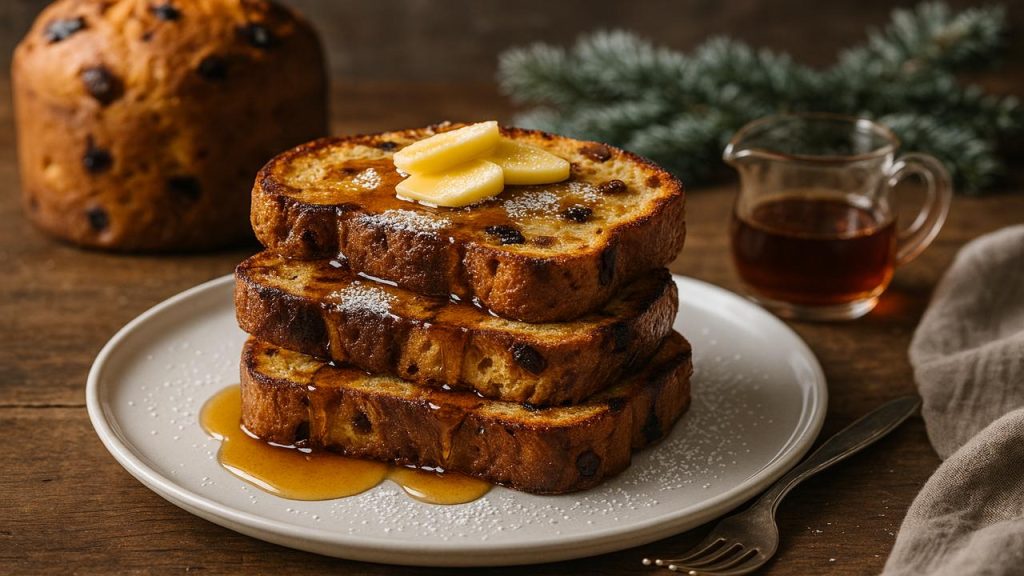
There’s a particular hush to Christmas morning when the world outside is muffled by frost and the tree lights blink like sleepy fireflies. You come into the kitchen with the same woolly socks and the same slow, deliberate movements you reserve for bright mornings and half-dreams. A loaf of panettone sits on the counter—a domed, golden thing studded with candied citrus and raisins, smelling faintly of butter and distant oranges. Turning that festive bread into French toast is less of a recipe than it is an act of gentle translation: sunlight, spice, edge of caramel, and the soft, pillowy crumb opening like a small, warm secret. This is the way to make a Christmas morning worth lingering over—out of slow heat, farm-basket ingredients, and the kind of kindness you taste between two slices.
Why Panettone Makes Perfect Christmas Morning French Toast
Panettone is not just bread; it’s a story. Born of long rises and the patient cold of European winter, its air pockets hold not only steam but memory: citrus peels pulling the nose, small pockets of sweet tang, a texture that yields rather than resists. For French toast, that spongey loft is a gift. It absorbs a custard without collapsing, and when browned, its caramelized edges sing against a soft center. Imagine biting through a crisp, butter-kissed crust into something that tastes like holiday light—orange and vanilla, a grain of almond, the ghost of rum or vanilla. It’s richer than regular white bread, so you can be generous with soaking time and still keep the slices intact. On a morning when the rest of the house is drifting toward the tree, the kitchen becomes a tiny theater where panettone takes its curtain call.
The Custard: Simple, Lush, Aromatic
I like to keep the custard elemental—eggs, a splash of cream, milk for softness, brown sugar for warmth, and a hit of vanilla and grated orange zest. The citrus slices through the richness like a cool creek through a winter field. Whisk slowly so the eggs remain silky, not frothy, and let the mixture sit for a few minutes to deepen. If you’re the sort to add spice, a whisper of cinnamon and nutmeg is enough to conjure the season without overwhelming the delicate fruit notes in the panettone. The custard should smell like the possibility of warmth: sweet, aromatic, patient. When you dip the bread, you want each slice to drink the liquid like a sponge—saturated but still dignified, preserving the architecture of that domed crumb so it can brown and hold its shape in the pan.
Technique: Soak, Sear, Keep Warm
Cut generous slices—an inch to an inch and a half—so each piece carries presence. Dunk each slice into the custard for about thirty seconds per side; panettone will usually demand a slightly longer soak than ordinary bread because of its density, but don’t let it collapse into a custardy puddle. Heat a skillet over medium and melt a knob of butter until it sings a soft, nutty perfume. Place the toast in the pan and listen. That faint sizzle is the small alchemy of sugar and butter meeting air. Sear until a deep golden crust forms—one that crunches gently and gives way to a tender interior. Transfer cooked slices to an oven-safe tray and keep them in a warm oven (about 200°F / 95°C) so everyone at the table can arrive at the same moment without soggy regrets. The secret is restraint: enough heat to create contrast, enough warmth to hold, but not so much that you burn the sweetness that makes panettone divine.
Toppings and Foraging-Themed Garnishes
Toppings are the narrative flourish. A dusting of powdered sugar is the simplest snowfall; a smear of mascarpone sweetened with lemon zest feels like a farmhouse gesture. If you want to bring the outside in, scatter seasonal berries that still carry the season’s tang—cranberries or a mix of jewel-toned berries—or warm an apple compote with a sprig of rosemary so that the kitchen smells like the hillside you walked this morning. Maple syrup pairs beautifully, but consider a drizzle of warm honey infused with orange peel for a gentler sweetness. For texture, toast some chopped almonds or hazelnuts and sprinkle them over the top—their brown buttered crunch dances against the soft interior. The idea is to balance tender, bright, and crunchy—so every forkful tells a tiny winter story.
Timing and Serving with the Walk Outside
Part of the ritual of panettone French toast is rhythm. If you can, plan a short walk before serving: a breath of cold air around the block, a glance at frosted branches, a packet of quiet between the oven’s warmth and the first bite. It’s an old trick—cool the appetite, heighten the senses—so by the time you return, the table smells irresistible and the coffee is ready. Serve family-style on a warm platter, passing bowls of toppings, letting each person craft their plate like a tiny winter landscape. The first forkful is always the most theatrical: steam lifting off sugar, a citrus note cutting through cream, the satisfying crunch of a corner where custard met skillet. That moment—eyes meeting over a shared plate, a soft “mm”—is the point where food becomes memory.
Recipe at a Glance
Below is a compact guide you can use at the stove. It’s calibrated for flexibility—scale the quantities for more guests, adjust spices to taste, and treat the table as an invitation to linger.
| Ingredient / Yield | Small (2–3) | Medium (4–6) | Large (8–10) |
|---|---|---|---|
| Panettone, sliced 1–1.5″ | 1 small loaf | 1 medium loaf | 2 large loaves |
| Eggs | 2 | 4 | 6–8 |
| Milk/Cream (ratio) | 1/2 cup milk + 1/4 cup cream | 1 cup milk + 1/2 cup cream | 1.5 cups milk + 1 cup cream |
| Sugar (brown) | 2 tbsp | 3 tbsp | 4 tbsp |
| Zest & Vanilla | 1 orange zest + 1 tsp vanilla | 1 orange zest + 1.5 tsp vanilla | 2 orange zest + 2 tsp vanilla |
| Butter for pan | 2 tbsp | 3–4 tbsp | 6 tbsp |
Frequently Asked Questions
Can I make this ahead of time?
Yes. You can slice the panettone and keep it wrapped in the fridge overnight, and mix the custard the night before (store it covered). Soak and cook in the morning for the best texture. If you must prepare the fully cooked toast ahead, reheat gently in a warm oven to recapture that just-made crispness.
What if I don’t have panettone—can I use brioche?
Brioche is an excellent substitute—rich and buttery. Panettone’s citrus and candied fruit set it apart, so if you use brioche, consider adding orange zest or a small handful of chopped candied peel to the custard.
How do I keep the slices from getting soggy?
Don’t over-soak. Panettone absorbs well; a quick, even dunk and a rest of thirty seconds per side is usually sufficient. Also, make sure your pan is hot enough to create a good sear immediately, which helps form a protective crust.
Any tips for serving a crowd?
Cook in batches and keep finished slices in a warm oven. Offer a few topping stations—syrups, berries, nuts, and soft cheeses—so guests can personalize their plates. It makes the meal feel communal and unrushed, exactly what a holiday morning should be.