The kitchen smells like a winter dawn: steam from the kettle, the bright, bitter hum of freshly ground coffee, cocoa dust suspended in the light like tiny snow. I stand at the counter with a whisk in my hand and a sheet pan waiting, thinking about how simple ingredients — eggs, sugar, flour, butter, chocolate, a good tablespoon of espresso — can be coaxed into a thing that looks like a fallen branch and tastes like festival. A classic Yule log cake with mocha buttercream is more than a dessert; it is a ritual of rolling time into sweetness, of taking the season’s cold and answering it with warmth that’s almost audible when you slice through the bark-like frosting.
The Heart of the Log: A Sponge That Remembers Summer
Start by thinking of the sponge as a meadow folded flat. Sponge cakes for roulades are airy, elastic, and tempered with enough sugar to caramelize in spots when baked. The batter is lively — egg yolks and whites kept apart like two bands of weather, whisked until they raise like a small wind. Fold gently; you want bubbles, not storms. As the pan slides into the oven, the scent blossoms: egg and sugar become something more hopeful, a base ready to hold cream and story. When it cools on the towel you dust with powdered sugar, the cake gives softly under your fingers and the surface is a canvas for the mocha to come.
Mocha Buttercream: Chocolate, Coffee, and Memory
Buttercream is tactile therapy. There’s a moment when butter, beaten until pale, turns into a blank page; then sifted cocoa, melted chocolate, and espresso arrive like ink. For a mocha buttercream that feels balanced and grown-up rather than cloying, bring strong brewed espresso to room temperature and mix it into a chocolate paste before introducing it to the butter. The chocolate melts and wraps the butter in velvet, while the coffee lifts the chocolate, making it sing rather than slump.
Making the Buttercream
Use unsalted butter at room temperature, sift your powdered sugar to avoid grit, and melt a dark chocolate you love — 60–70% cacao is a safe place where bitterness and sweetness meet. Add espresso slowly; watch the emulsion form. You’ll know it’s right when a spoonful of frosting clings to the spatula like a blanket. Taste as you go: if it leans too sweet, a tiny pinch of flaky salt will steer it back. If it’s too bitter, a touch more sugar or a few drops of vanilla will round the edges.
| Ingredient | Amount |
|---|---|
| Eggs (large) | 4 |
| Granulated sugar | 3/4 cup |
| All-purpose flour | 3/4 cup |
| Unsalted butter (for buttercream) | 1 cup (227 g) |
| Powdered sugar | 3–4 cups, sifted |
| Dark chocolate (60–70%) | 4 oz (115 g), melted |
| Espresso (strong) | 2 tbsp |
| Cocoa powder (optional, for dusting) | 1 tbsp |
Rolling and Filling: The Quiet Art
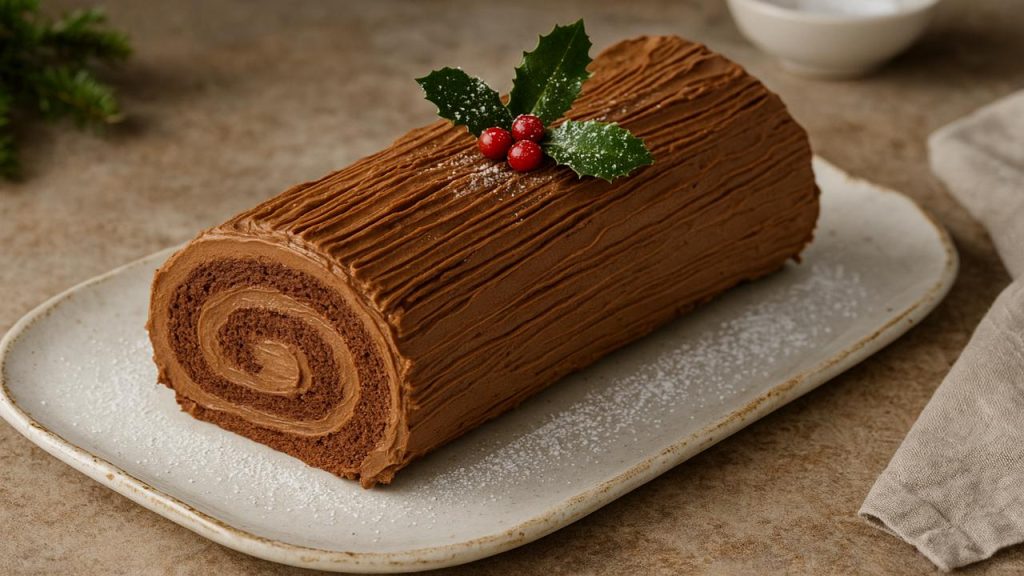
There’s a hush that comes over the kitchen when you assemble the roulade. The sponge, dusted and right-side-down onto a towel, cools until pliable. A smear of mocha buttercream is spread in a layer not too thick, because you want the log to roll without springing open. From one short end, begin to roll — slow, even, like coiling a sleeping fox. The towel helps; it’s a gentle hand guiding the cake into its final shape. When the seam tucks under, trim the ends so you’re left with a clean log, then slice a section off to become a little branch, angling the cut so it looks as if the log had been sawed in the woodlot.
Decor and Bark: Nature’s Imitation
Decorating the outside is where playfulness meets patience. Cover the log in a thin layer of buttercream, chill to set, then add a second, textural coating. Use the back of a fork or the tines of a spatula to create ridges and knots; drag a small offset spatula along the surface to make bark. Dust with cocoa to carry the illusion of charcoal and shadow. Add sugared cranberries, rosemary sprigs for the look of pine, or small meringue mushrooms — their powdered edges mimic morning frost. The goal isn’t perfection; it’s a memory of a forest floor, the impression of bark, the charm of a hand-made winter relic.
Serving and Stories: How to Share a Yule Log
Bring the log to the table as if it’s a guest. Slice with a serrated knife, steady and confident, each piece revealing marbled layers of cake and creamy mocha. The first forkful is always a revelation: the ephemeral sponge, the dense buttercream, the warm whisper of coffee threaded like grain through chocolate. Serve with hot cocoa, a simple espresso, or a warmed cream — something that echoes the mocha without competing. Tell the story of how the cake came to be; invite the person next to you to name the forest that inspired it. The Yule log is, at its best, a storyteller’s dessert.
Frequently Asked Questions
How far ahead can I make the Yule log?
You can assemble the cake and buttercream 1–2 days ahead and keep it chilled, well covered to avoid absorbing fridge odors. For longer storage, freeze the rolled and wrapped cake for up to a month; thaw in the fridge overnight before decorating and serving.
Can I make this without espresso?
Yes. Use a strong brewed coffee or even instant espresso dissolved in a tablespoon of hot water. The coffee flavor lifts the chocolate; if you omit it entirely, add a pinch more salt and a teaspoon of vanilla to give the buttercream depth.
What if my cake cracks when rolling?
If cracking happens, it’s usually because the sponge cooled too long or was rolled too tightly. Reassemble by spreading a thin layer of buttercream over the surface, pressing the cracks closed as you re-roll. Chill briefly to set, then finish decorating. A few small cracks add rustic charm.
How do I get a more stable buttercream in warm weather?
Stabilize buttercream by chilling the mixer bowl and butter beforehand, and add a small amount of confectioners’ sugar; if it’s still soft, pop the finished log into the fridge before serving. For very warm climates, consider a Swiss meringue or ganache-coating hybrid, which tends to hold up better.
When you slice into the finished Yule log and the mocha perfumes fill the room, you’ll find that making it was less about technique and more about attention — the small, repeated gestures that turn ingredients into comfort. Like a forest remembers snow, your cake will remember your hands. And when someone takes that first bite, they’ll taste not just chocolate and coffee, but the story you folded into the roll: quiet, warm, and distinctly seasonal.