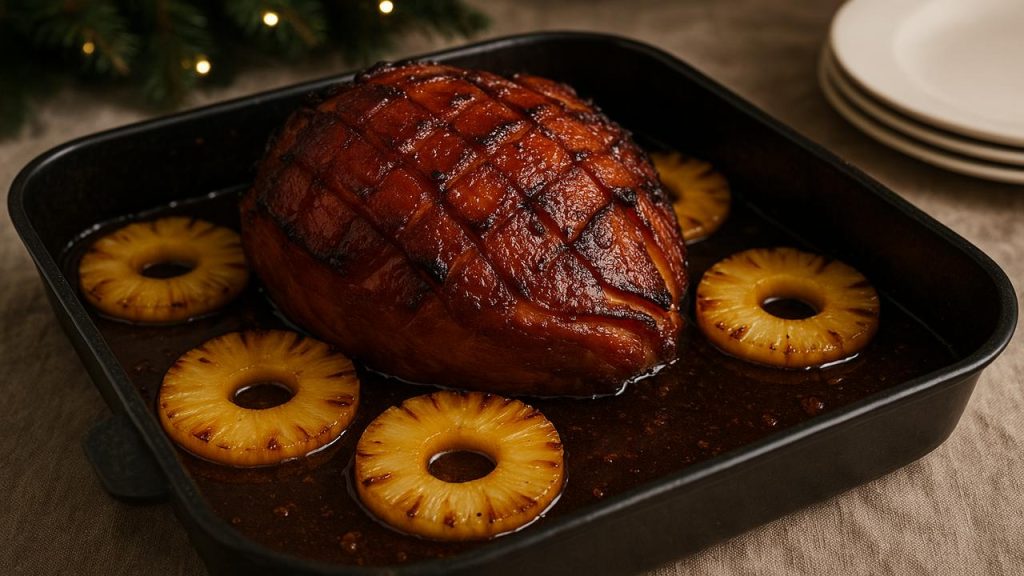
The first time I glazed a ham with honey and laid pineapple rings like tiny suns across its bronzed back, the kitchen felt like the middle of December and the edge of something ceremonial all at once. Steam curled upward, sticky and fragrant — citrus, sugar, warm smoke — and I remember thinking that Christmas could be measured in aromas the way a tide is measured in moonlight. One-pan, one beautiful roast: simple, generous, and wildly forgiving. It cooks itself into the conversation, the clink of cutlery, the exhale after the first forkful. This is a story about that one-pan honey-glazed ham with pineapple, told like the slow discovery it deserves.
The One-Pan Philosophy
There is an economy in restraint. On busy holiday mornings, I prefer to orbit the table, not be chained to the stove. A single pan gives you that freedom — it concentrates flavor, lets the sugars caramelize in the same room where the juices gather, and keeps the kitchen honest. Imagine a shallow pool of glaze reducing at the ham’s feet, flecked with cloves and citrus zest, while rings of pineapple sear gently, their edges darkening like the pages of an old book. The pan is the stage, and the ham is the performer that grows better with every minute it stays under heat. Serving from the pan keeps the ritual intact: carve where the glaze is thickest, spoon the pooled syrup, and let people breathe in the first, unmistakable wave of warmth and sweetness.
Ingredients That Sing
Good cooking starts with good guests: the ham, the honey, the pineapple, each one a character with room to stand on its own. Choose a well-cured, bone-in ham if you can — it keeps moisture and anchors the flavor. The pineapple isn’t just garnish; its acidity cuts through the honeyed richness and its caramelized sugars echo the glaze. Brown sugar and mustard add depth, and a scatter of whole cloves creates those perfumed pauses as you slice.
| Ingredient | Amount | Notes |
|---|---|---|
| Bone-in smoked ham | 6–8 lb | Score the fat in a diamond pattern |
| Honey | 1/2 cup | Local, floral if possible |
| Brown sugar | 1/3 cup | Adds molasses notes |
| Pineapple rings (canned or fresh) | 6–8 rings | Reserve juice for glaze |
| Whole cloves | 20–25 | Press into scored fat |
The Ritual of Glazing
When the oven door closes, the house exhales. The glaze is where the quiet drama happens: honey and brown sugar melted with a splash of pineapple juice, a spoon of Dijon mustard, and a pinch of cinnamon or ginger if you like a spiced note. Brush it on in layers, and resist the impulse to slather it all at once. Each pass of the brush is a small ceremony — slower, more deliberate strokes build a lacquer that crackles and gleams. Watch for the glaze to bubble at the edges of the pan and catch color where the pineapple sits; those browned margins are the parts you will want to scoop onto the platter. As the sugar melts, the smell shifts from sweet to deeply roasted, and the pineapple begins to sing in a sharper key, its acids brightening the whole composition.
Baking, Basting, and Timing
Temperature is the heartbeat here. Low and steady heat allows the interior to stay succulent while the exterior caramelizes. Plan for about 10–12 minutes per pound at 325°F for a pre-cooked ham, less if your ham is smaller. Every 15–20 minutes, tilt the pan and baste: collect the juices, stir in a drizzle of honey if the pan looks dry, and spoon it back over the ham. The pineapple rings should be added in the final 30–40 minutes so they darken without overcooking. If you like the visual of cross-hatched sugar, sprinkle a little extra brown sugar onto the ham in the last 10 minutes and give it a brief blast under the broiler, but watch it like a hawk — sugars move from molten to burnt in a breath.
Serving Stories and Leftovers
Serve straight from the pan if you can. Let the ham sit 10–15 minutes after it comes out of the oven; resting lets the juices redistribute and the glaze set a little so it doesn’t run off the moment you slice. Carve thick pieces for the first wave — those who like leverage will demand them — and then thinner slices for sandwiches that will be made later, next-day. Leftovers are a festival of possibilities: dice the ham into an omelet, fold it into a savory bread pudding, or toss it into a skillet with leftover pineapple and rice for a quick, fragrant fried rice. The glaze will stay on like a memory, sweetening everything it touches.
There is something about serving a single-pan ham that feels like offering a story rather than a meal. It is the same story told in slightly different ways with every year: a golden arc of heat and sugar, the exhale of the whole table as knives strike bone, the hush when the first slice is lifted to someone’s plate. Holiday cooking is often about the people it gathers, but the food — when it is fussed over and then left to do its work — is how those people get to remember the night.
Frequently Asked Questions
Can I use canned pineapple, or should I use fresh?
Canned pineapple works beautifully and is convenient; its juice is especially handy for the glaze. Fresh pineapple adds a brighter, less syrupy acidity and a firmer texture when caramelized. Either is fine — choose what feels easier or tastes more like your childhood holidays.
Is this recipe safe if my ham is fully cooked?
Yes. Most store-bought hams are fully cooked. You are warming and glazing rather than slow-roasting from raw. Heat until the internal temperature reaches about 140°F and the glaze is bubbling and caramelized.
What if my glaze starts to burn?
Lower the oven temperature right away and tent the ham loosely with foil to prevent further browning. Sugar can go from perfect to bitter quickly, so intervene early. You can also whisk a little water or pineapple juice into the pan to slow the caramelization.
How long will leftover ham keep?
Properly refrigerated, sliced ham will keep 3–4 days. Freeze portions for longer storage — chopped ham thaws quickly and makes weeknight dinners feel like a small holiday.
Can I make the glaze ahead of time?
Absolutely. Make the glaze up to two days ahead and keep it chilled. Warm gently before brushing it onto the ham to return it to a brushable consistency. This gives you one less thing to worry about on a bustling holiday morning.