The late-afternoon light pools on the counter like warm honey as I tie the twine around the turkey breast. There’s a ritual to this: the scrub of citrus, the scatter of rosemary needles like tiny green feathers, the hush that settles over the kitchen. Even when you’re roasting a single breast instead of a whole bird, it feels like setting a table for a small, intimate season. The aroma of orange zest alone feels like sunlight in your hands. This is a roast that remembers the orchard and the woodpile, the slow turning of smoke and sugar, and it rewards patience with golden skin and a glaze that sings between tart cranberry and bright orange. Let me walk you through how to make that perfect roasted turkey breast with cranberry orange glaze — the kind that makes people move closer to the table and talk slower.
Choosing the Right Turkey Breast
Start with the body language of the bird. A fresh, well-packed turkey breast should feel firm, cool, and fragrant with a whisper of the farm — not plastic or wet. If you can source a local bird, you’ll notice the difference in texture and flavor. Size matters not only for serving but for rhythm: a 3–5 pound boneless breast roasts more evenly and lends itself to that coppery, crackly skin we all want. Bone-in breasts offer slightly more flavor and a dramatic carving moment; boneless is easier for weeknight dinners and slices that behave politely on a platter. If you imagine the finished roast, think about the people eating it and the story you want it to tell — nostalgic, elegant, or simply comforting.
The Silence Before Roasting: Brining and Seasoning
There is a quiet science to brining. Salt is the conductor — it draws in flavor and moisture, so the meat sings with juiciness. For a turkey breast, a simple overnight brine is all you need. Add aromatics like smashed garlic, bay leaves, and orange peels, then refrigerate. If you’re in a rush, a dry brine with kosher salt, a touch of brown sugar, and a scattering of thyme and crushed orange zest for 12–18 hours will coax a deep, seasoned heart. Before roasting, pat the skin dry until it squeaks slightly against your fingers. Dry skin becomes crisp skin.
| Ingredient | Amount | Notes |
|---|---|---|
| Turkey breast (bone-in or boneless) | 3–5 lbs | Adjust roast time for weight |
| Kosher salt | 1–2 tbsp (dry brine) | Or 4 cups water + 1/2 cup salt for wet brine |
| Fresh rosemary & thyme | 3–4 sprigs each | Tuck under skin or on top |
| Orange zest & juice | 2 oranges | For glaze and aromatics |
| Fresh cranberries | 1 cup | For glaze; cook until bursting |
Roasting: Heat, Time, and That Golden Skin
Roasting is where temperature and temperament meet. Preheat your oven to 425°F (220°C) to jumpstart browning for the first 15–20 minutes, then lower to 350°F (175°C) to finish without drying the meat. Place the breast on a rack in a shallow pan so heat circulates and the underside doesn’t stew. Brush the skin with a little oil or melted butter and scatter herbs; the fat carries flavor and helps the skin blister to that perfect tawny color. Use a reliable instant-read thermometer — you’re aiming for 160–162°F (71–72°C) in the thickest part of the breast because carryover cooking will bring it to a safe, juicy 165°F (74°C) while it rests. Listen for the gentle crackle as the skin takes on color. That moment is the oven’s applause.
Cranberry Orange Glaze: Bright, Sticky, Honest
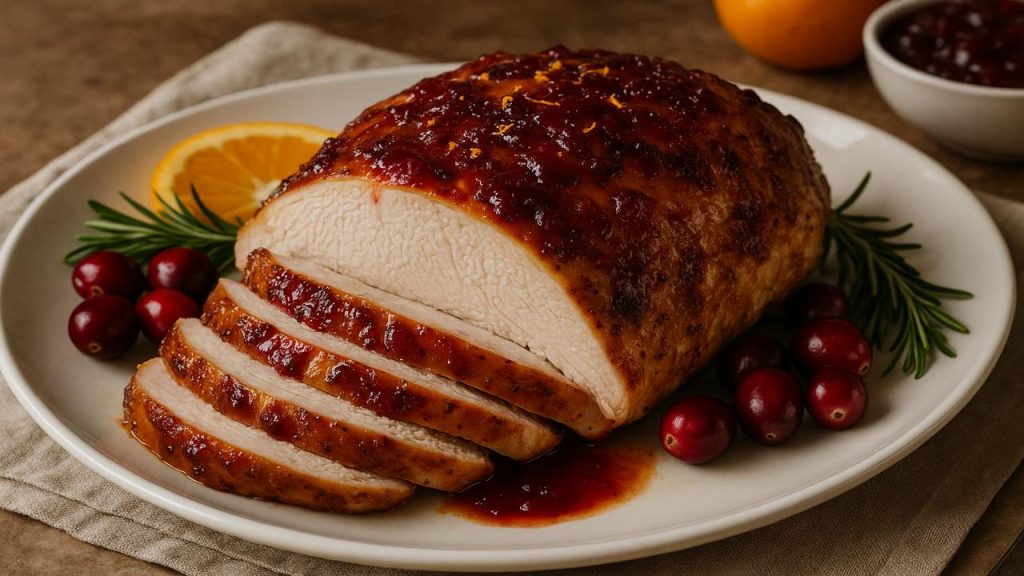
Make the glaze while the bird finishes its final minutes. Simmer fresh cranberries with sugar, a splash of orange juice, a strip of zest, and a smidge of balsamic or apple cider vinegar for depth. As the berries burst, the mixture thickens into a jewel-toned sauce. Stir in a knob of butter off the heat for silkiness. When the turkey is out and resting, spoon or brush the glaze over the skin, watching it bead and catch the light like tiny rubies. The glaze should be tart and balanced — not cloying. If it leans too sharp, a small spoonful of honey softens the edge without hiding the cranberries’ bright honesty.
Resting, Slicing, Serving — The Last Quiet Work
Resting is where you surrender control and let physics do the work. Tenting the breast with foil for at least 15–20 minutes redistributes juices into the meat, making each slice succulent. Carve thin slices against the grain for tenderness; notice how the aroma lifts with every cut, citrus and woodsmoke braided together. Serve the turkey on a simple platter, a scattering of fresh orange slices, a few sprigs of rosemary, and a bowl of extra glaze. The first forkful will be a warm, layered thing: crisp skin, honeyed glaze, and meat that still smells faintly of the herbs you tucked underneath. It’s humble, celebratory, and quietly perfect.
There’s a small joy in repetition — the same recipe becomes better because you remember the little adjustments: a minute less on the rack, a grating more zest, a pinch of salt at the finish. Roast a turkey breast with care and it will return the favor, giving a meal that feels like autumn light and a holiday hush rolled into one plate. Share it with people who savor the pause between courses, who talk like they’re carving memories. That’s the magic: food that insists you slow down and notice.
FAQs
Can I use frozen turkey breast?
Yes. Thaw thoroughly in the refrigerator — allow roughly 24 hours for every 4–5 pounds — then pat dry and proceed with brining or seasoning. A partially frozen breast will not brown evenly and will lengthen cooking time unpredictably.
How long should I brine a turkey breast?
For a wet brine, 8–12 hours is often sufficient for a 3–5 pound breast. Overnight up to 18 hours is fine. For a dry brine, 12–24 hours is ideal. Avoid over-brining, which can make texture mushy.
What if my glaze is too thin?
Simmer it longer to reduce and thicken, or add a small slurry of cornstarch and water (start with 1 tsp cornstarch mixed into 1 tbsp cold water) and whisk into the simmering glaze until it coats the back of a spoon.
Can I make the glaze ahead of time?
Absolutely. Make the glaze a day ahead and refrigerate. Reheat gently before glazing the turkey; add a splash of orange juice or water if it has thickened too much in the fridge.
How should leftovers be stored?
Cool the turkey within two hours and refrigerate in a shallow airtight container; it will keep 3–4 days. Leftover slices taste wonderful cold in sandwiches with a smear of glaze or warmed gently in a skillet with a splash of stock to keep them moist.