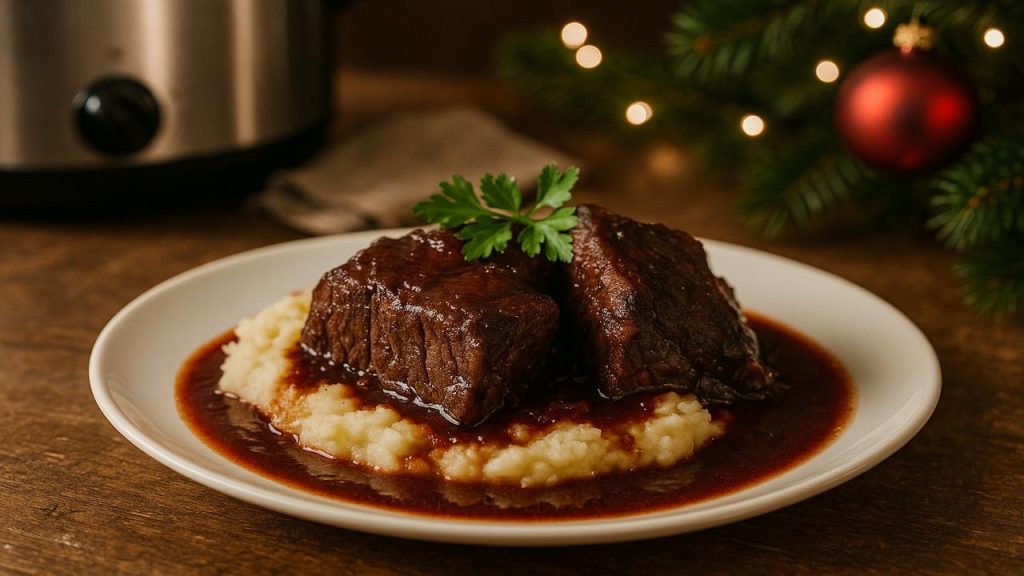
The kettle sighs, a cool little exhale into the cold air, and from the corner of the kitchen comes the first whisper of what will fill the house by evening: slow, red wine-braised short ribs, the kind of dish that seems to reforge family stories out of marrow and steam. On Christmas Eve the city hushes, snow softening the edges of traffic and footsteps, and the slow cooker hums like a small hearth. You can’t rush it; that’s the charm. The bones will tell you when they’re done, and the smell — dark fruit, rosemary, caramelized onion — will pull everyone from whatever they were doing, toward the kitchen door.
A Ritual of Preparation
There’s a ritual to making these ribs that feels almost like lighting candles. Trim the fat, season the meat with salt and pepper, and pat the pieces dry so they brown with intent. Heat oil until it shivers, and brown each rib until the crust is a deep mahogany. That step is not showmanship; it’s flavor alchemy. Deglaze the pan with a full-bodied red wine — something you’d enjoy sipping — letting it bloom those browned bits into a glossy river of depth. Add aromatics: roughly chopped carrots, onion, celery; a couple of bruised garlic cloves; a sprig or three of fresh rosemary and thyme. Slide everything into the slow cooker and nestle the ribs into their steaming bath. The machine will do the patient work. The house will gather round the aroma like it’s magnetized.
The Slow Cooker’s Quiet Magic
On low, these ribs will take seven to nine hours; on high, four to five. Time is a kind of seasoning here — the longer, the silkier the meat, the more the collagen dissolves into glossy sauce. I like to start them in the morning so the house wears the scent all day: red wine’s fruity tannins soften and the stock swells with bone and vegetables. Occasionally, lift the lid and breathe in that concentrated winter spice; it’s an olfactory postcard of Christmas Eve. Mid-afternoon, skim any excess fat, stir gently, and let the sauce keep marrying the flavors. When the ribs finally give to the fork, when the meat threatens to slide away from the bone at the slightest encouragement, you will know. The texture is couch-sofa-sinking kind of tender and the sauce coats the back of a spoon like velvet.
Ingredients at a Glance
Here’s a simple table to help you gather everything before the warmth takes over. It’s designed to be clear on a phone screen so you can glance at the list while carrying a mug of hot cider and juggling wrapping paper.
| Ingredient | Quantity |
|---|---|
| Beef short ribs (bone-in) | 3–4 pounds (1.4–1.8 kg) |
| Full-bodied red wine | 2 cups (500 ml) |
| Beef or chicken stock | 1 cup (250 ml) |
| Carrots, onion, celery | 2 each carrots/onion, 2 stalks celery |
| Garlic, rosemary, thyme | 3 cloves, 2–3 sprigs each |
| Tomato paste, Worcestershire, salt & pepper | 2 tbsp, 1 tbsp, to taste |
Finishing Touches that Sing
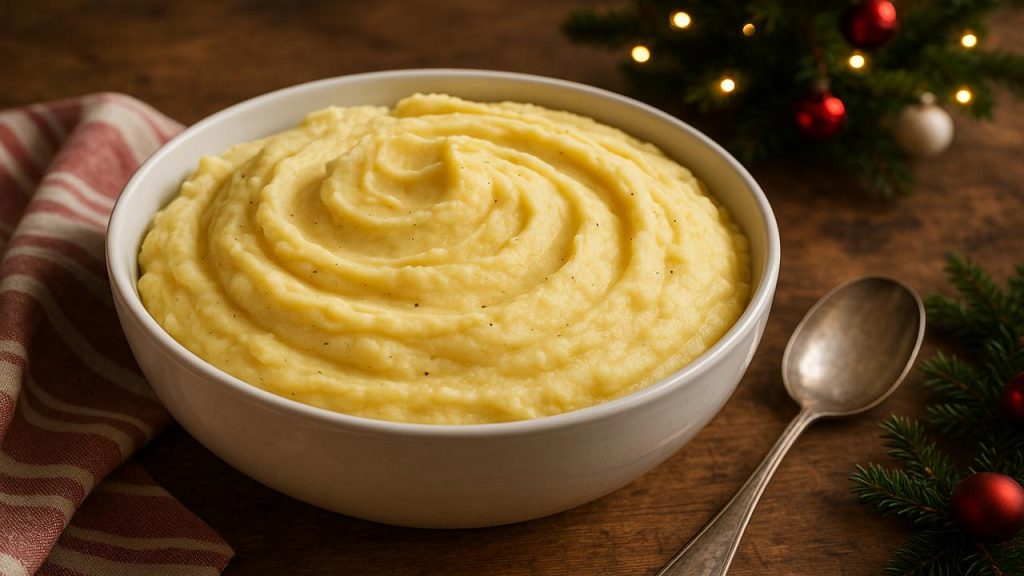
When the ribs are tender, lift them out and tent them on a warm platter. Strain the cooking liquid, pressing the vegetables to coax every bit of savory into the sauce. Reduce this liquid on the stove until it’s thick enough to coat a spoon — or for extra gloss, whisk in a small knob of butter. A splash of balsamic or a teaspoon of brown sugar can balance the wine’s acidity if you prefer a sweeter finish. Spoon the sauce generously over the ribs, scatter chopped parsley for color, and store bowls of creamy mashed potatoes or polenta nearby to catch every drop. The first bite is almost ceremonial: the meat yields, the sauce pools, and the world feels just a touch kinder.
Setting the Scene: Christmas Eve Service for the Table
On Christmas Eve, the meal is more than nourishment; it’s storytelling. Lay the table with mismatched plates and candles that smell faintly of pine. Invite everyone to bring a memory — a song, a recipe fragment, a childhood recollection — and let the kitchen hum as you serve. With each serving, the ribs release another note of wine and rosemary, and conversation loosens like a clasp undone. If there’s snow outside, the steam from the gravy fogs the windows and makes the lights look like distant stars. The slow cooker, humble and persistent, has turned a handful of ingredients into a thing that makes the room softer and the holiday quieter, more intimate.
Small Variations, Big Comforts
If you want to tweak, consider substituting orange zest for part of the wine for a winter citrus lift, or add a handful of prunes for an element of sweet depth that feels almost Dickensian. For a gluten-free flourish, thicken the sauce with a cornstarch slurry instead of flour. Vegetarians won’t get the same marrow-rich experience, but roasted root vegetables with a red wine reduction echo the same seasonal mood. The truth is, this recipe is forgiving. It rewards patience and allows for improvisation, which is why it’s become my go-to for making something memorable without the last-minute frenzy.
FAQ
Can I use cheaper wine?
Yes. Don’t use cooking wine — choose a still drinkable bottle, even if it’s modest. The flavor will concentrate as it cooks, so a pleasant, fruit-forward red works best.
How do I reheat leftovers without drying them out?
Gently reheat in a low oven (around 300°F / 150°C) covered, or return to the slow cooker on low with a splash of stock to keep the sauce loose. Reheating slowly preserves tenderness.
Can I prepare this a day ahead?
Absolutely. In fact, it often tastes better the next day when the flavors have had time to meld. Refrigerate overnight, skim solidified fat from the surface before reheating, and warm gently.
What side dishes pair best?
Creamy mashed potatoes, buttered noodles, roasted Brussels sprouts, or polenta are classic companions. A simple green salad with a bright vinaigrette cuts through the richness.