On a chilly December morning, sunlight slides low through the kitchen window and catches the frosted breath of the garden: a scatter of red berries like tiny beacons, a sprig of rosemary that smells of pine and old winter walks. That is the feeling I chase when I make the ultimate Christmas trifle — not just a dessert, but a small landscape, layered and familiar. It is the sound of glass against spoon, the pale gold of custard like late afternoon light, and the berry-stained fingers offered for a quick, conspiratorial taste. This trifle is an invitation to slow down, to assemble a bowl that tastes like the season: bright, comforting, and a little wild.
Why a Trifle Feels Like a Winter Thicket
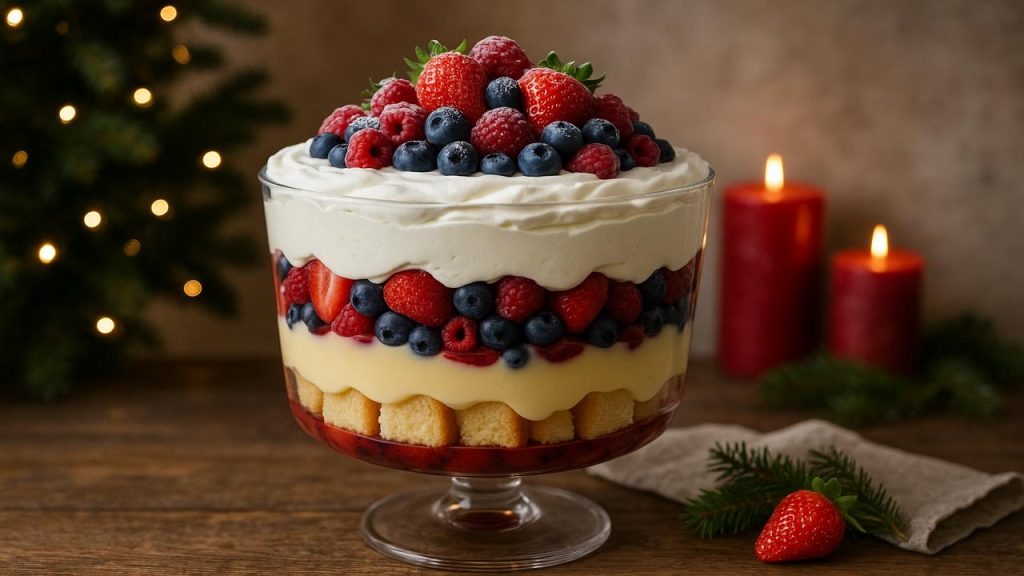
There’s something about a trifle that mimics the way I think about winter scenery: layers upon layers, each with its own texture and secret life. The sponge sits like a fallen log, soaked and moss-soft, cupping the custard that settles like a pond surface, while berries scatter across the top like late-season fruit clinging to the brambles. When you spoon through it, you move through micro-landscapes — the echo of sponge, the cool, silky hush of custard, the snap of berry seeds and the airy softness of whipped cream. It’s a dessert that asks to be experienced slowly, with senses wide open. Every spoonful is an excursion, and each element sings in its own register while harmonizing with the rest.
The Berries: Foraged Color and Wild Sweetness
Start with the berries because they are the trifle’s map. A mix of raspberries, strawberries, blackberries, and a scatter of cranberries (for that tart, Christmasy zip) gives you a range of textures: juicy, seedy, firm, and tart. If winter has stripped the hedges bare where you live, frozen berries are a faithful substitute — thawed slowly and drained so they keep their shape and release a little of their perfume into the custard. Imagine biting into a jewel of ruby red, its juice a bright punctuation against the rich custard. I like to reserve a handful of whole berries for the very top, unbruised and shimmering, because presentation matters: the first sight should be as joyful as the first bite.
Tip: macerate lightly
A brief maceration with a spoonful of sugar and the zest of orange or a splash of liqueur (or orange juice for those who prefer no alcohol) wakes the berries without turning them to syrup. It’s the difference between a chorus and a solo — subtle, but essential.
Silky Custard: Sunlight in a Bowl
Custard is the heartwood of the trifle; make it with care and the whole dessert will stand firm. I whisk eggs and sugar until the mixture blinks like morning, then fold in warm milk infused with vanilla and the whisper of citrus. Cook it gently — the kind of low, patient simmer that smells like baking in an empty cottage — until it thickens enough to coat the back of a spoon. The texture should be almost velvet: rich but buoyant, capable of cradling fresh fruit without flattening it. For a brighter, lighter touch, fold in a little crème fraîche into the still-warm custard. That small addition keeps the custard from feeling too heavy and adds a faint, cultured tang that complements the sharpness of winter berries.
Layering Like a Landscape
Assembling a trifle is a practice in restraint and generosity at once: you want each layer to be distinct, yet mingling at the edges. Begin with sponge or pound cake torn into rough pieces — its porous edges will drink up juices like autumn ground soaks up rain. Spoon on custard, scatter berries, and repeat. The most beautiful trifles are not perfectly symmetrical; they should look like something that grew rather than was constructed. Below is a simple layering guide to help you balance flavors and textures without losing that wild, natural feel.
| Layer | Amount for 8–10 people | Quick Tip |
|---|---|---|
| Sponge or pound cake (torn) | 8–10 slices or 450 g | Brush with sherry/juice |
| Macerated mixed berries | 600–800 g | Light sugar + citrus zest |
| Vanilla custard | 1.2–1.5 liters | Make ahead, chill |
| Whipped cream | 400–500 ml | Lightly sweeten |
| Garnish: nuts, zest, herbs | Handful | Rosemary sprig or toasted almonds |
Assembling and Serving: The Ritual
Pull the trifle together an hour or two before serving so flavors have time to marry but textures stay lively. I assemble mine in a clear glass bowl because watching the strata is part of the pleasure: you can see custard banishing shadows, berries pooling, cream like a snowdrift. When it’s time to serve, invite people to the table with a spoon and a story — where the berries came from, or why a particular custard recipe has been passed down. Serve with warm mugs of something spiced: tea, mulled cider, or coffee. There is a communal hush that comes over a room when people take that first spoonful — it is part reverence, part delight.
At the end of the day, the ultimate Christmas trifle is less about perfection and more about memory. It is a bowl of contrasts — tart and sweet, airy and dense, cold and silk-warm — that somehow cohere into a single, generous thing. Make one with what you love: forage a few sprigs of rosemary for garnish, fold a handful of toasted hazelnuts into the top layer, or add a whisper of orange liqueur. Let the trifle be a small, edible map of the season, one you can return to as the snow falls and the light thins. Serve it to friends, let it sit in the center of the table, and watch how quickly it becomes the heart of the evening.
FAQ
Can I make the trifle a day ahead?
Yes. You can prepare the custard and macerate the berries a day ahead. Assemble the trifle a few hours before serving, or fully assemble and keep it refrigerated overnight — just be aware that the sponge will soften more with time, which some people love.
What can I use instead of alcohol to soak the sponge?
Use orange juice, brewed tea, or a mix of fruit juice and a splash of vinegar for brightness. Apple cider works beautifully, and you can warm it slightly with spices for a cozy flavor.
How do I prevent the custard from curdling?
Cook the custard slowly on low heat, stirring constantly. Remove from heat when it just thickens and coat the back of a spoon. Temper eggs by adding a little warm milk first if you’re combining hot liquid with eggs.
Can I use frozen berries?
Absolutely. Thaw them in the fridge and drain any excess liquid before using to avoid a watery trifle. If they release a lot of juice, save a little to drizzle over the sponge for extra flavor.
How should I store leftovers?
Cover the trifle with plastic wrap or a lid and refrigerate for up to two days. Textures will change over time, but the flavors often deepen. If you expect leftovers, consider assembling in individual glasses for easier storage and serving.